



The Produce, Conserve, Include (PCI) strategy, launched by Mato Grosso, Brazil, in 2015, alongside the launch of the Paris Agreement at the UNFCCC COP21, aims to reconcile agricultural expansion, forest conservation, and social inclusion. Our key question is whether the PCI Strategy is meeting its own publicly stated 2030 targets. We review official PCI monitoring indicators, independently assess land-use and deforestation trends from 1985 to 2024, quantify soybean and pasture changes within rural settlements, and examine the limited integration of Protected Areas into the Strategy. A decade after its announcement, our assessment reveals mixed outcomes: while the state increased large-scale agricultural productivity and reduced Amazon forest clearing, critical deficiencies persist. Targets below threshold on sustainable timber production, land tenure regularization, and technical assistance and financing for family farmers constrain the progress of this initiative. Weak integration of Protected Areas and Indigenous Territories and the dominance of commodity-driven production further undermine the strategy’s transformative potential. With strengthening governance, broader stakeholder engagement, and improved economic incentives, Mato Grosso can realign conservation outcomes with inclusive and sustainable livelihoods and achieve its stated goals.
Brazil’s agricultural boom has transformed the country from a net importer to a global leader in export of grains and beef (Stabile et al., 2020). While this rapid agricultural expansion has yielded societal benefits according to economic metrics such as the Gross Domestic Product (GDP) (Oliveira, 2016), it has also taken a heavy toll on the environment, family farmers, and Indigenous Peoples and Local Communities (IPLCs) (Stabile et al., 2020). Approximately half of Brazil’s Cerrado biome and at least 17% of the Amazon biome were converted to agriculture by 2021 (Berenguer et al., 2021; Butt et al., 2023; Da Conceição Bispo et al., 2023). Driven by large-scale agricultural production, conflicts have been sparked over land rights and access with IPLCs as well as family farmers (Garrett et al., 2017; Hecht et al., 2021). As industrial agriculture and cattle breeding encroaches deep into the Amazonia, Cerrado and Pantanal regions, it has become crucial to understand the constraints and opportunities in balancing food, grain, and fiber production with economic growth, environmental conservation, and social sustainability (Brando et al., 2013; Moutinho and Azevedo-Ramos, 2023).
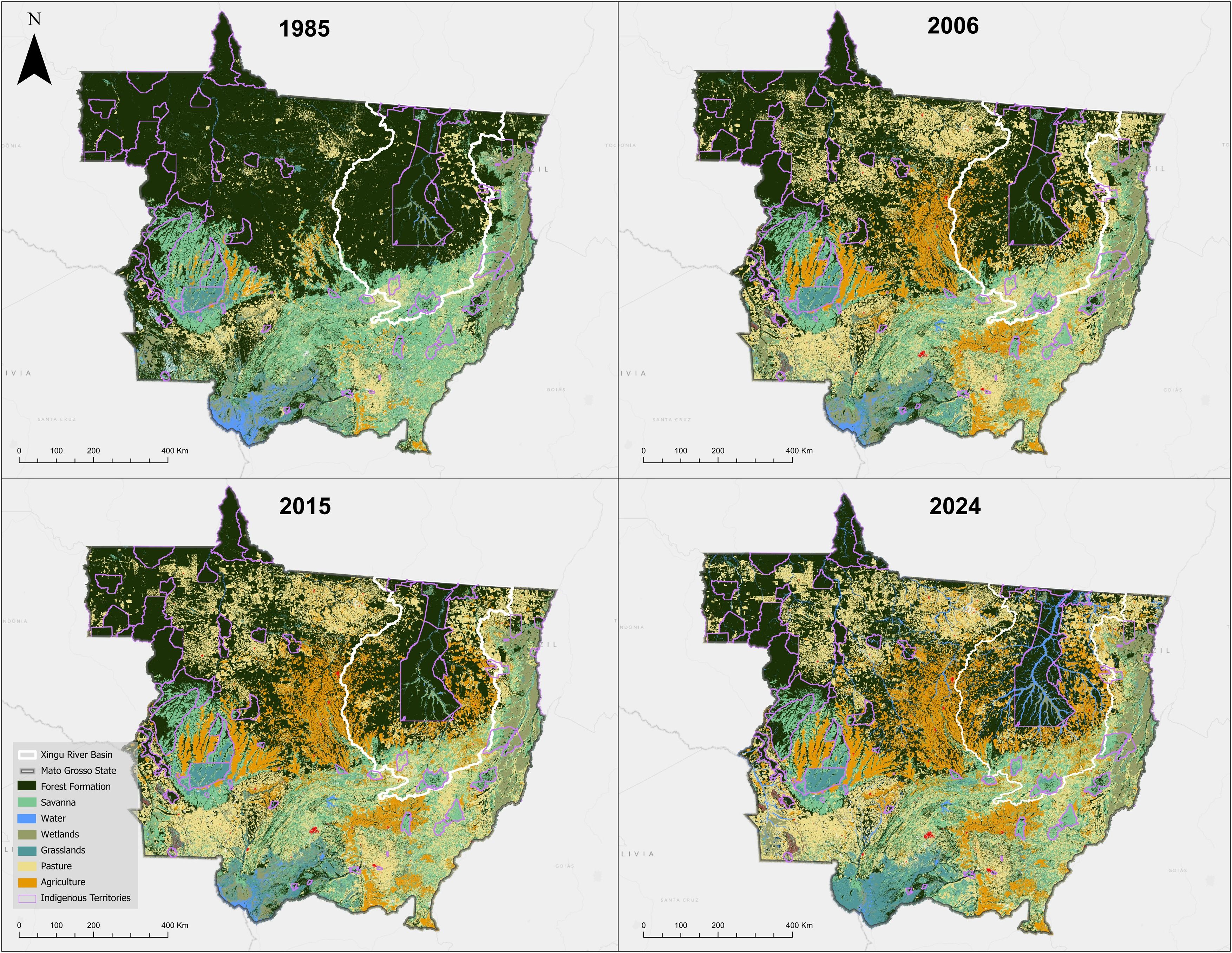
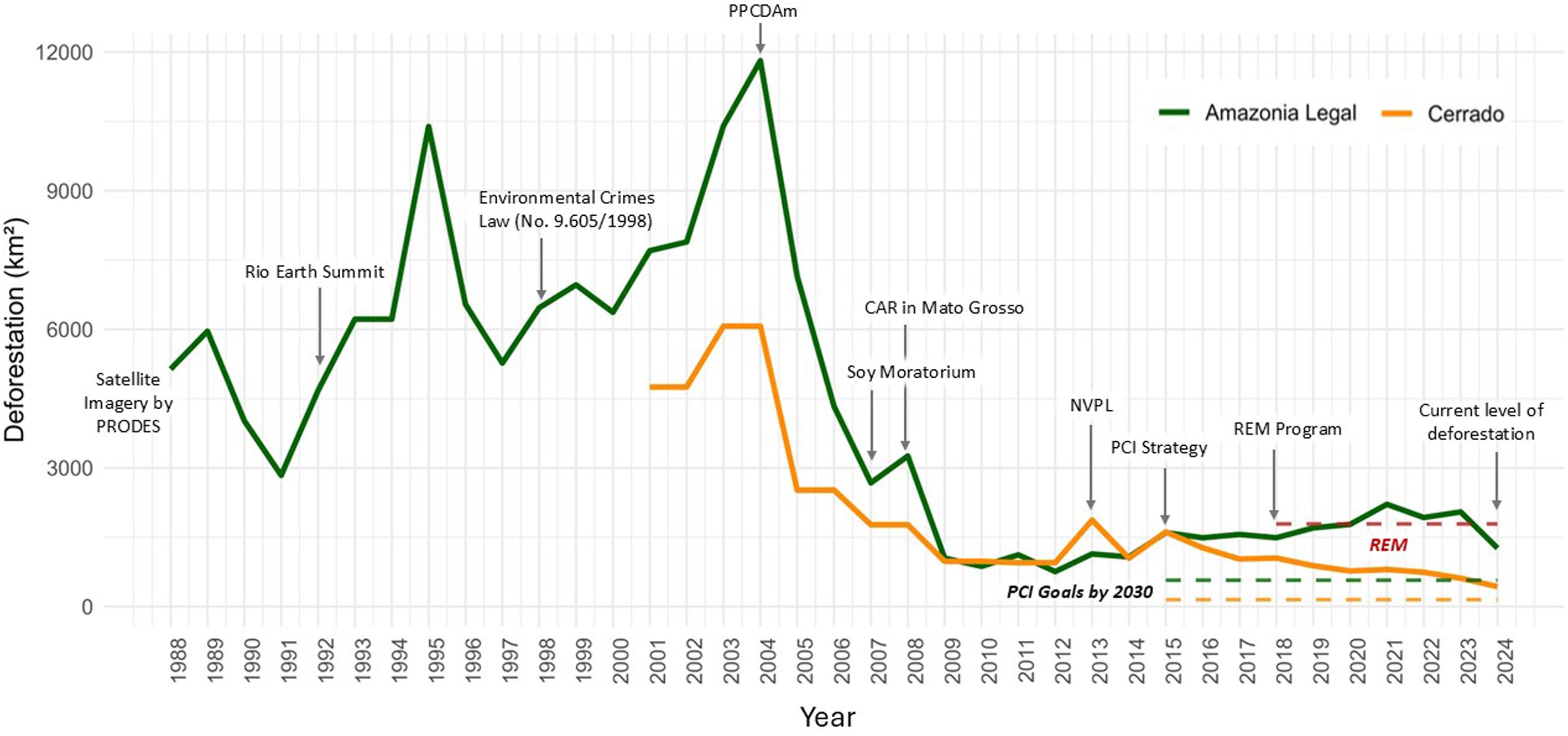
At the forefront of Brazil's agricultural development, the state of Mato Grosso exemplifies the struggle to balance economic growth with environmental sustainability (Fig. 1). Development in the state has primarily revolved around the economic expansion of a few agricultural commodities, mostly at the expense of native Amazonia tropical forests and Cerrado vegetation (Fig. S1). Beginning in the 1970s, Federal government promoted fiscal incentives, land titling, colonization policies, and subsidized rural credit drove Mato Grosso’s food production systems to be based on the conversion of native vegetation into low-productivity pastures (Oliveira, 2016; Hecht et al., 2021), propelling the creation of the ‘Arc of Deforestation’ region along the southeast and southern Brazilian Amazon (Moreno, 1999; Brando et al., 2013). In the Cerrado, the loss of native vegetation was similarly extensive, though a larger share occurred within the limits permitted under Brazil’s Native Vegetation Protection Law (“Forest Code”), which requires lower Legal Reserve percentages in the Cerrado (20–35%) than in the Amazonia biome (80%) (Alencar et al., 2020; Azevedo et al., 2017). Mato Grosso adopted production systems aligned with the Green Revolution’s model: large-scale, intensification-based, and highly mechanized. The State introduced soybean cultivars more adapted to nutrient poor soils, devising significant interventions in the pH and nutrient availability of the soil, led by Brazil's Agricultural Research Corporation, EMBRAPA (Oliveira, 2016). Concurrently, deforestation in the state peaked, reaching 11,814 km² in 2004—roughly 80% above the average deforestation rate of the 1990s and early 2000s. In response to international pressure and emerging environmental legislation, Mato Grosso curbed Amazon-specific deforestation by 93.6% by 2012 (from 11,814 km2 in 2004 to 757 km2 in 2012) (INPE, 2025). Having achieved one of the most successful reversals in deforestation patterns across tropical regions, the State proposed an innovative framework at the UN Climate Change Conference (COP21) in Paris to balance Production, Conservation, and Inclusion (PCI).
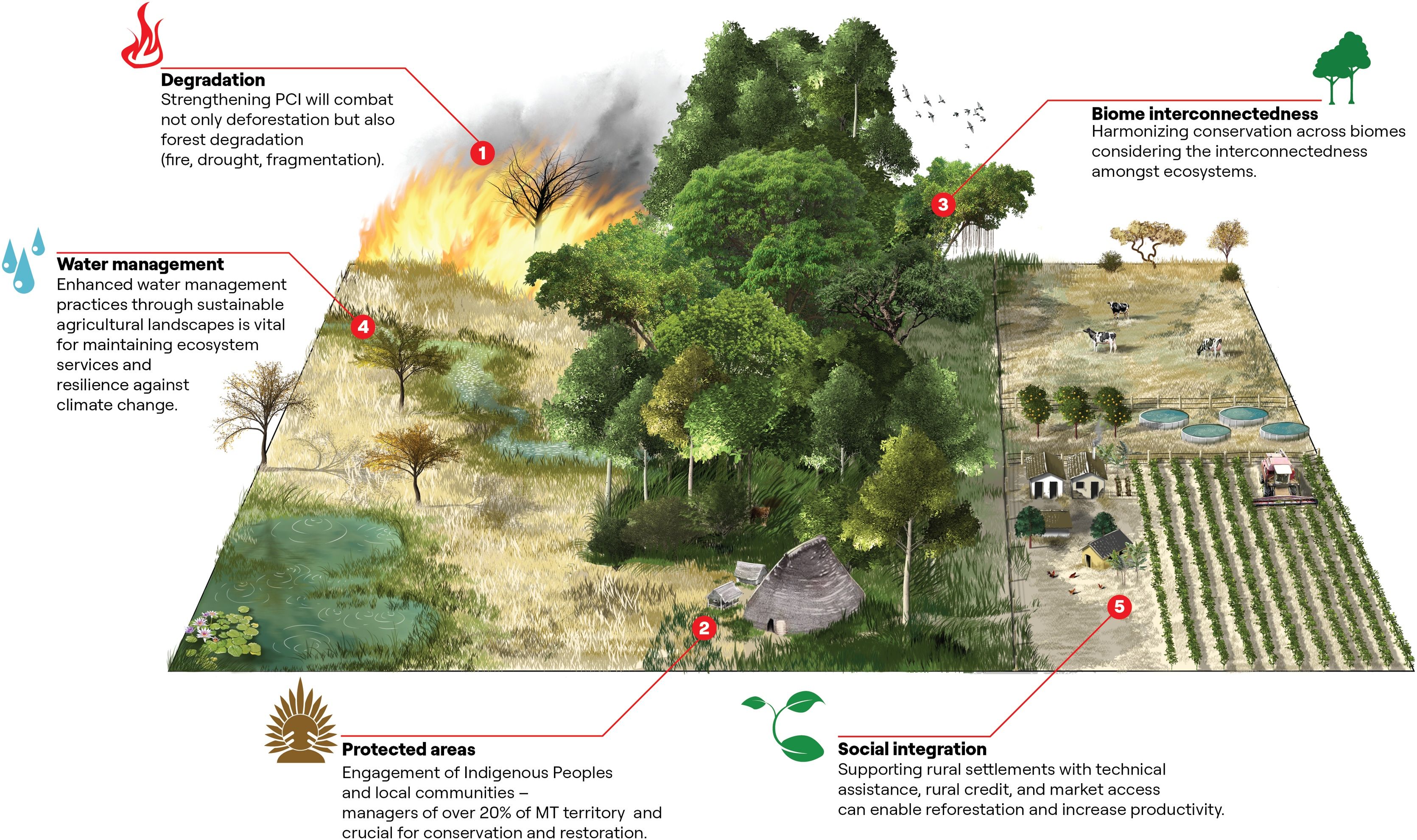
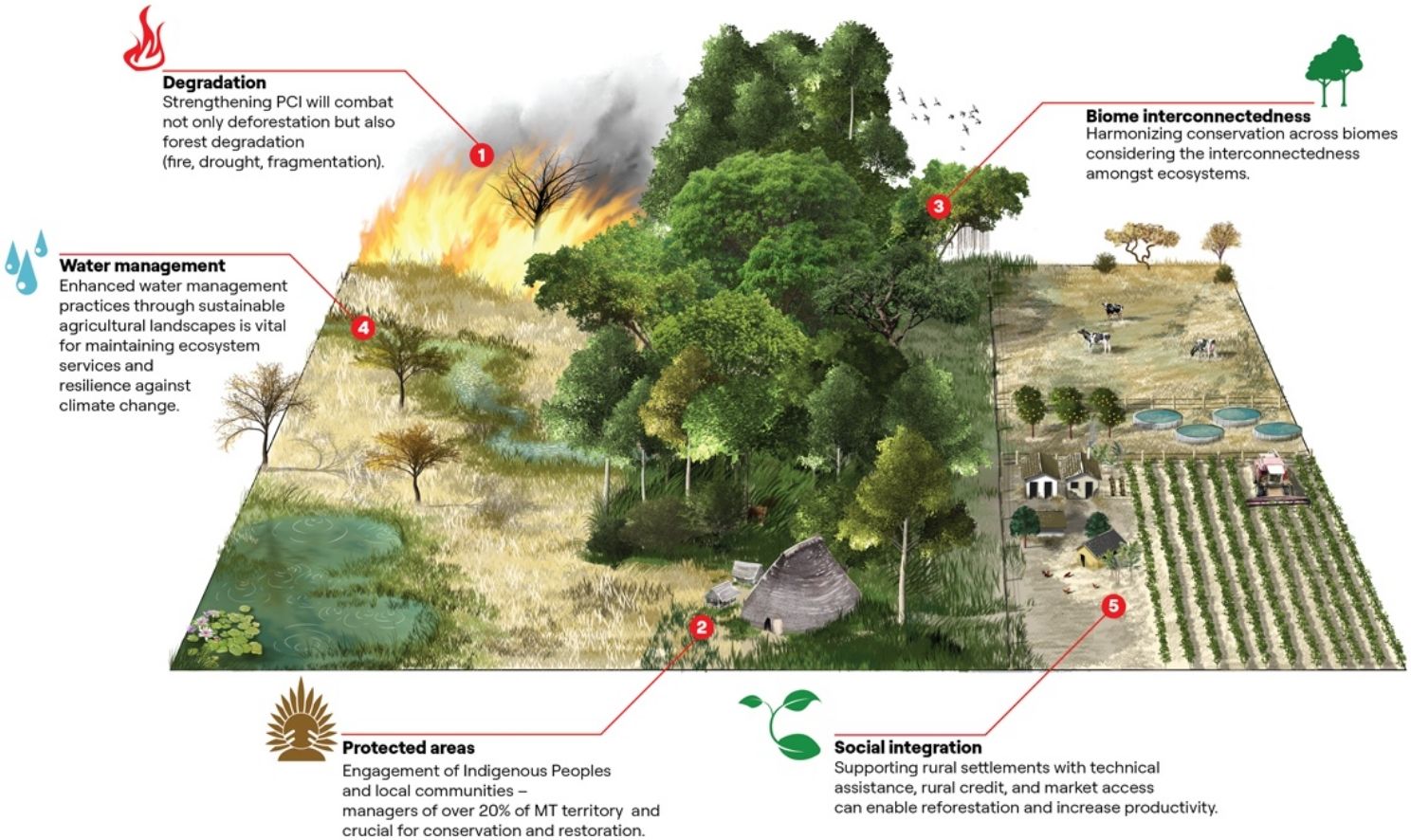
The PCI conceptual PCI framework. This illustrates the key emphasis areas by the State of Mato Grosso to implement the Produce, Conserve, and Include (PCI) strategy (PCI Institute, 2023). The figure highlights aspects we unveiled as necessary for achieving the strategy's goals holistically, namely (1) improving deforestation and degradation controls, (2) integrating Indigenous Territories and Peoples, (3) biome interconnectedness, (4) fire and water management, and (5) social inclusion.
Launched at COP21 in Paris and legally formalized by State Decree No. 468/2016, the PCI Strategy was subsequently equipped with implementation mechanisms through State Decree No. 46/2019, which represents one of the most prominent subnational jurisdictional sustainability initiatives in the Amazon basin (Macdonald et al., 2024; Milhorance and Bursztyn, 2018; von Essen and Lambin, 2021). Unlike project-based conservation interventions, PCI seeks to align agricultural intensification, forest conservation, and social inclusion within a single state-level governance framework. The PCI targets include more than doubling cattle productivity and grain production while conserving 60% native vegetation cover, cutting deforestation by 90%, and integrating smallholder farming and local governments into productive markets (PCI Institute, 2023). A defining feature of the PCI strategy is its explicit intent to mobilize and coordinate finance at the jurisdictional scale. Under the REDD + mechanism, the state receives results-based payments once it demonstrates verified reductions in deforestation and greenhouse-gas emissions; these payments, in turn, help fund the public policies that sustain the Strategy (see Box S1) (Barros and Cabral, 2022). This funding rationale was a central motivation for launching the Strategy at COP21, and underpins its ambition to align production, conservation, and inclusion within a single financing architecture.
The PCI Strategy is operationalized through a dedicated and climate finance structure, multi-sector governance arrangement under the coordination of Mato Grosso’s Civil House (Casa Civil), in articulation with environment, agriculture, economic-development, and planning secretariats. Since 2019, the state has formally assigned the PCI Institute (a nonprofit executing entity) the responsibility for coordinating, executing, funding, monitoring, and reporting on the Strategy (see Box S1), combining executive oversight, inter-secretariat coordination, private-sector engagement, and donor participation (Government of Mato Grosso, 2019). Implementation is organized around action lines for each pillar, translating the headline goals into sectoral targets and indicators that are tracked through periodic monitoring reports. The full cost of implementing the PCI agenda is estimated at US$ 38 billion, to be met from productive returns, credit lines, public policies, and philanthropic funds. Initial capitalization came from the REDD + Early Movers (REM) program — funded by the German and United Kingdom governments (EUR 59 million) — which finances forest monitoring, environmental regularization, institutional strengthening, and targeted support for family farmers, and thereby underpins both the “Conserve” and “Include” pillars. Public documentation, however, emphasizes outcome indicators while providing limited detail on implementation instruments, budgets, and responsibilities, a transparency gap we bring back across the three pillars below.
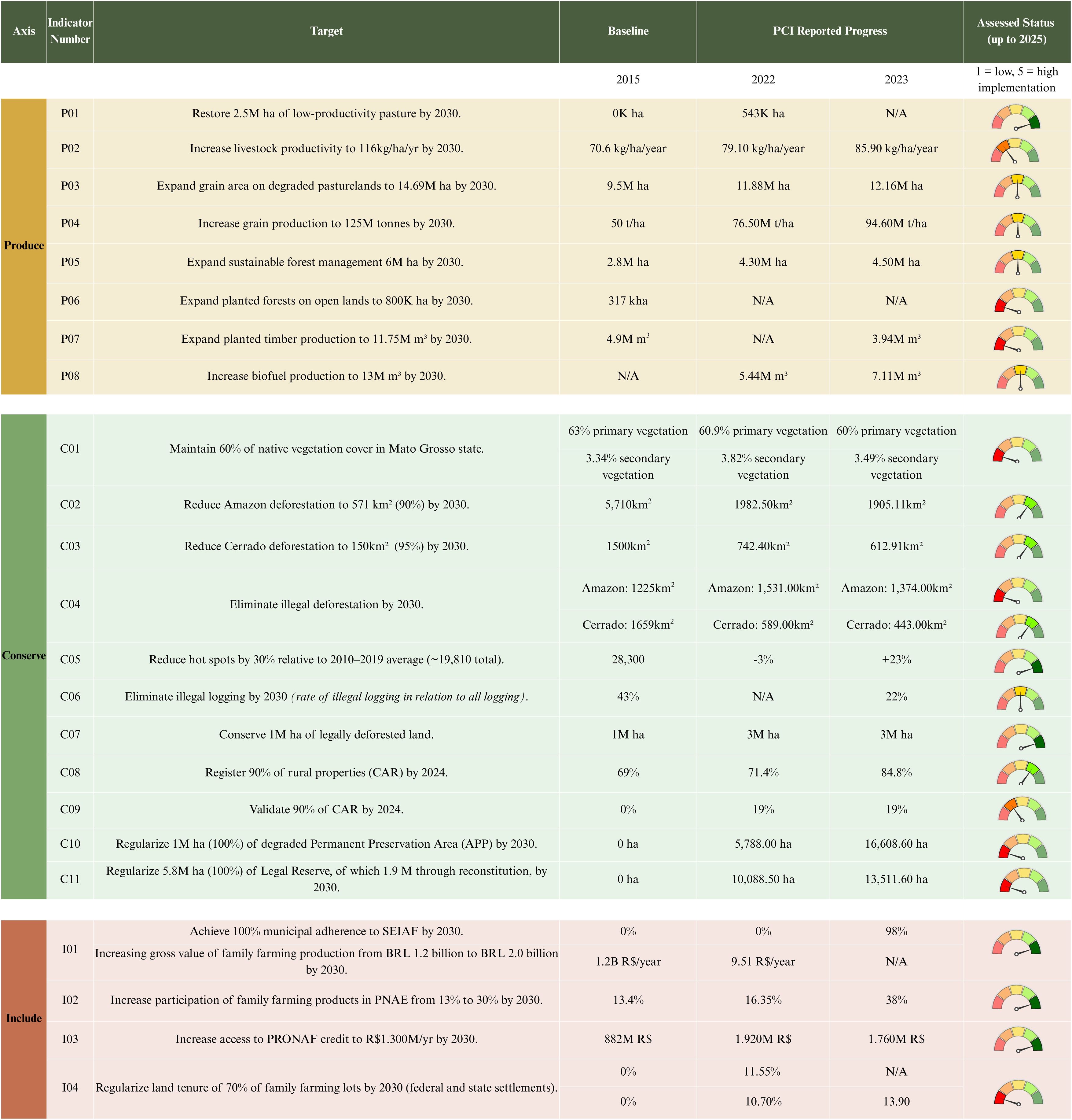
Here we ask a simple, empirically tractable question: does the PCI Strategy meet its own publicly stated 2030 targets? To address this question, we combine a systematic assessment of reported progress against PCI targets across the Produce, Conserve, and Include pillars (Table 1) with the following independent analysis. First, we reconstructed land-use, vegetation-cover, and deforestation trends in Mato Grosso from 1985 to 2024 using MapBiomas and INPE/PRODES data. Second, we quantified changes in soybean and pasture areas within rural settlements between 2012 and 2024, providing evidence on land-use dynamics associated with the Strategy’s inclusion pillar. Third, we critically assessed the limited incorporation of Protected Areas into PCI targets and governance, despite their importance for avoided deforestation, climate regulation, and forest resilience. We further propose, as an interpretive hypothesis, rather than a tested result, that the uneven progress we document reflects a weakening of the links between the ‘Conserve’ and ‘Include’ components, and that strengthening their integration could help realign outcomes with the Strategy's goals (Fig. 1). To illustrate outcomes within broader land-use trajectories and socio-environmental patterns, we synthesized publicly available spatial datasets on land use and land cover change (MapBiomas 10), deforestation trends (INPE/PRODES), rural settlements (INCRA), and protected areas and Indigenous Territories (FUNAI/ICMBio) for the period 1985–2024 to illustrate broad trends in agricultural expansion, deforestation, and land-use change within Mato Grosso, with particular attention to rural settlements and biome-level dynamics. Analyses focused on trend comparison and visual inspection (e.g., changes in cultivated area, pasture, and forest cover over time, and overlap with settlements and protected areas) to provide a critical overview of the narrative discussion of the PCI’s production, conservation, and inclusion pillars. In addition to tracking progress against PCI indicators, we reviewed publicly available policy and program documents to identify the main instruments associated with each pillar, including the State decree establishing PCI, PCI Institute monitoring reports, and project portfolio materials. Public PCI materials emphasize outcome indicators (e.g., hot spots, deforestation rate), but provide limited information on implementation instruments, budgets, and responsibilities. If fully implemented, the PCI strategy would cut MT’s CO2 emissions by 6 Gt by 2030, equivalent to nearly 2.6 years of Brazil’s total CO₂ and emissions, making PCI one of the largest sub-national jurisdictional plans for climate mitigation (Milhorance and Bursztyn, 2018; Government of Brazil, 2024). It would also help regulate regional climate through water recycling (Coe et al., 2017), maintain ecosystem services and climate stability (Costa et al., 2019), and improve local livelihoods.
PCI indicators (2022–2023) and authors’ assessment (2024–2025). PCI reported results are based on official PCI monitoring reports (2022–2023). Achievement was calculated as progress from the indicator baseline toward its target, using separate formulas for increasing, decreasing, and maintenance indicators. Achievement was converted into a five-point scale: <20% = 1, 20–<40% = 2, 40–<60% = 3, 60–<80% = 4, and ≥80% = 5. Speedometer icons visualize these scores from red (low implementation) to dark green (high implementation), based on proximity to 2030 targets. N/A indicates data that was not available at the time of preparation. Source: (PCI Institute, 2024, 2023, 2022), author’s own preparation.
Our approach to comprehensively assess the Produce, Conserve, Include (PCI) Strategy follows prior policy-oriented synthesis studies that triangulate descriptive spatial trends with peer-reviewed literature, official statistics, and policy documents to assess land-use and governance dynamics (Nepstad et al., 2014). Beyond its state-level relevance, the PCI Strategy represents a prominent jurisdictional approach to reconciling agricultural production, forest conservation, and social inclusion in a tropical agriculture frontier context (Sampaio, 2023). Jurisdictional strategies have been widely promoted to overcome the limitations of project-based interventions by aligning policies, incentives, and monitoring systems across entire administrative units (von Essen and Lambin, 2021; Macdonald et al., 2024; Nepstad, 2017; Meyfroidt et al., 2018). Yet, systematic assessments of jurisdictional approaches remain limited to forest governance instruments in the Brazilian Amazon (Koch et al., 2019; Sampaio, 2023), and whether they meet their own declared targets. To our knowledge, few studies have combined these perspectives by systematically assessing progress toward a jurisdictional strategy’s own stated targets while also examining whether its design reflects the broader principles identified in the jurisdictional sustainability literature. As an ambitious subnational initiative in the Brazilian Amazon, PCI offers an empirical reference point for evaluating the promises and tensions inherent in jurisdictional sustainability strategies. Below, we discuss the three pillars of PCI: production, conserve and include, highlighting the objectives that have been achieved as well as those that remain unfulfilled.
ProductionMato Grosso increased large-scale agriculture output through area expansion and productivity gains even before formally adopting the PCI strategy. Between 1985 and 2018, MT’s annual soybean production increased from 1.7 Mt to approximately 40 Mt, growing its global soybean export share 1% to nearly 40% by the mid-2010s (Oliveira, 2016). Similarly, MT’s cattle herd expanded from 15 million to roughly 86 million animals in the same period (Stabile et al., 2020). Such growth was accompanied by substantial improvements in productivity per hectare, with grain yields increasing from 1.3 t ha−¹ in 1975 to 4.1 t ha−¹ by 2019. Overall, the state also gained productive areas (Fig. 2). This difference marked a 215% rise and resulted in greater total output despite decreasing annual deforestation rates between 2002–2014 (Leal, 2021). Collectively, productivity improvements and expansion in scale established a solid foundation upon which the PCI strategy could build.
Map of Mato Grosso’s per-hectare land use changes between 1985–2024 (source: MapBiomas, 2025; created with ArcGIS Pro v. 3.0.0). In 1985 (a), MT had 88% of the territory as native vegetation (savanna, wetland, grassland, and forest formation) and 11% was used for agriculture and pasture. By 2008 (b), global pressure to reduce deforestation led private sector to establish the Soy Moratorium, CAR was implemented in MT, and government advanced in agrarian reforms farm settlements (Nepstad et al., 2014). In 2015 (c), the PCI Strategy was formalized in Paris, France, during the UNFCCC COP21, mobilizing jurisdictional climate finance (as introduced above and detailed in Box S1) to support a comprehensive sustainability agenda. By 2023 (d), approximately 57% of the MT territory remained as native vegetation while 43% was used for agriculture and pasture. Protected Areas and Indigenous Territories have a proven role in avoiding deforestation (Josse et al., 2021), stabilizing regional climates (Almada et al., 2024; Sullivan et al., 2017), and enabling secondary forest regrowth (Baragwanath et al., 2023).
With the formal implementation of the PCI strategy, Mato Grosso continued to experience sustained agricultural growth, reflected in cattle productivity increases. Cattle productivity per hectare, for instance, improved from 70.6 kg/ha/year to 85.9 kg/ha/year between 2015 and 2023 (T1, P02) (PCI Institute, 2024), towards the PCI goal of 116 kg/ha/year by 2030. Grain production is also on track toward the target of 125 Mt by 2030; from the 94.6 Mt recorded in 2023 (T1, P04), preliminary data from Brazil’s Institute of Geography and Statistics (IBGE) indicates that Mato Grosso surpassed the 100 Mt mark in 2025, driven primarily by soybean and maize expansion (IBGE, 2026), an enabler for biofuel production increase (T1, P08). Agriculture directly or indirectly accounts for 70% of the state's GDP and substantially contributes to Brazil’s trade surplus (Milhorance and Bursztyn, 2018). The productivity gains and scale expansions within Mato Grosso’s agricultural frontier have solidified Brazil’s position as an agricultural powerhouse, responsible for 41% of the European Union’s soybean imports and 39% of its beef imports (Rajão et al., 2020). Correspondingly, the State’s economic growth has consistently outperformed national averages; in 2023, the state’s GDP grew by 10.6%, significantly surpassing Brazil’s national growth rate of 2.9% (IBGE, 2024). Agricultural productivity sustained improvements have transformed the state’s economy and reinforced Brazil’s international agricultural prominence.
Despite notable gains in livestock productivity and grain output, the PCI Strategy is not on track across all indicators within the Production, particularly those related to planted forests and timber production. The goal of expanding sustainable forest management to 6 Mha by 2030 (T1, P05) reached 4.4 Mha by 2022, while planted timber production (T1, P07) reached 3.94 Mm³. IBGE preliminary data confirms the later trend, with production below 4 Mm³ (IBGE, 2025). However, it is unclear how widespread forest degradation across the State due to fire, illegal logging, drought, and edge effects could substantially reduce MT’s capacity to enhance timber production.
The expansion of planted forest area on open lands to 800,000 hectares by 2030 (T1, P06), which does not hold official data in the PCI monitoring reports, faces stagnation in some years according to MapBiomas-based indicators (Table S1). Limited progress in planted forests must be interpreted considering structural data constraints. The State of Mato Grosso does not maintain a preventive and systematized state-level registry of planted forest areas beyond polygons submitted in specific licensing processes. This prevents precise quantification of plantations and limits access to information on species, stand age, rotation cycles, and volumetric estimates. The absence of a structured database constrains transparency, production monitoring, forest planning, and biomass/carbon stock assessment. Previous analyses of the state’s agrarian political economy highlight structural asymmetries that favor commodity intensification over diversified land-use models (Milhorance and Bursztyn, 2018), a trend that is also observed more broadly across Brazil’s agribusiness (Rajão et al., 2020). These gaps suggest that while large-scale commodity agriculture – and its related PCI targets – has advanced rapidly (Rajão et al., 2020), the forestry-based diversification envisioned by PCI has not scaled proportionally.
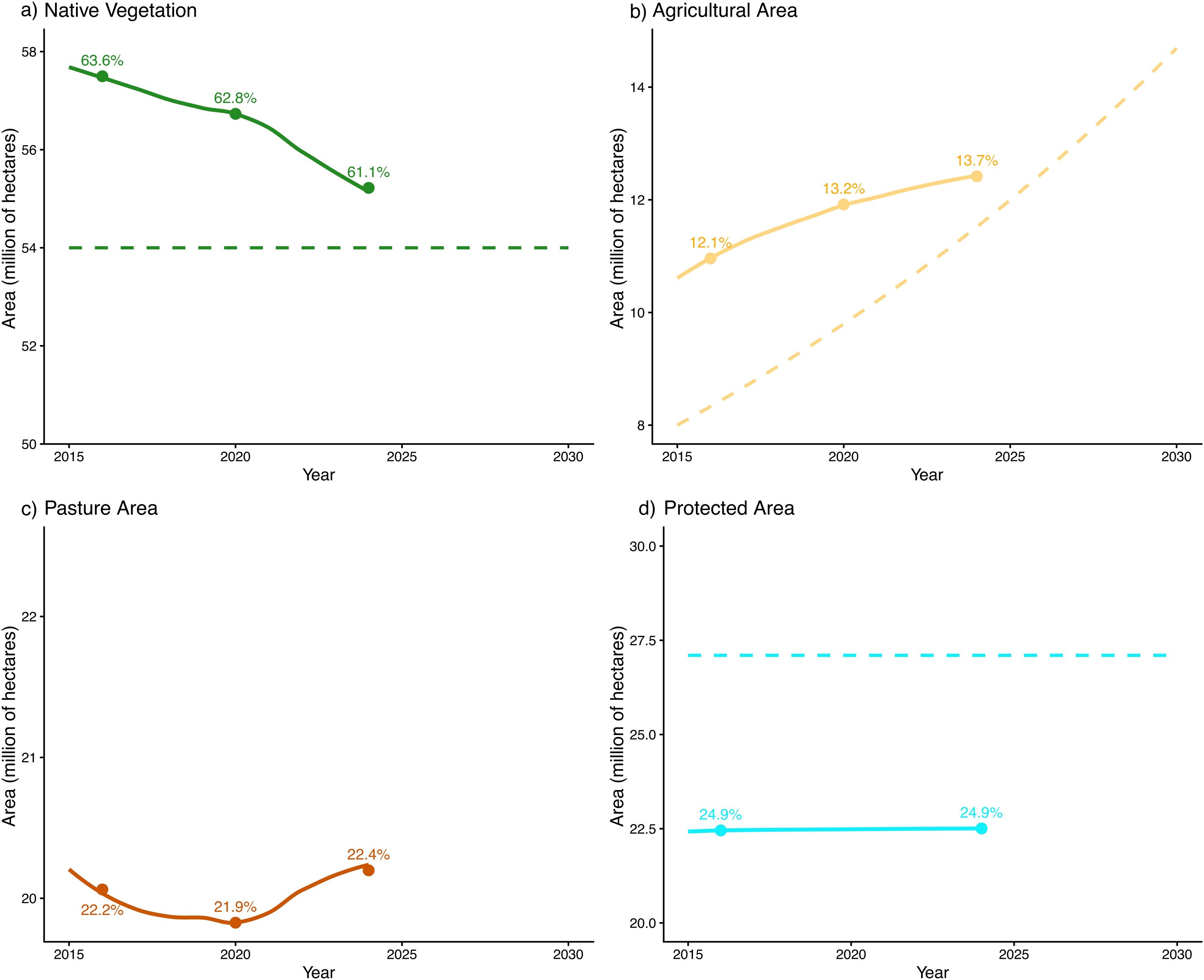
ConserveThe Conservation pillar illustrates the central challenge within the PCI Strategy: while Mato Grosso is nearing target thresholds for aggregate native vegetation cover, it has struggled to reduce deforestation, operationalize restoration obligations, and enforce environmental compliance mechanisms. The Strategy’s headline conservation target is to maintain 60% of native vegetation cover (T1, C01), and PCI`s official monitoring suggests the state risks falling below this threshold (PCI Institute, 2024), with the deforestation in the Amazonia and Cerrado remaining above the strategy’s targets (Fig. 3). Amazonia deforestation in Mato Grosso fell sharply over the decade preceding PCI, from a 2004 peak of 11,814 km2/yr to 1075 km2/yr in 2014. During the PCI period, it has averaged 1706 km2/yr (2015–2024) and stood at ∼1500 km2/yr in 2024 (T1, C02). Measured against the PCI reference (baseline) level of ∼5710 km²/yr, the 90% reduction target implies an annual rate of 571 km²/yr by 2030; the current rate therefore remains roughly 2.6–3 times above that target. Even though federal environmental enforcement capacity weakened under the Bolsonaro administration (2019–2022), Mato Grosso did not experience sharp deforestation spikes during this period, suggesting that some monitoring and enforcement foundations operate at the state level (MMA, 2023; Silva Junior et al., 2020). Some reductions in deforestation may be offset by spillover effects into Cerrado (Villoria et al., 2022), and these reductions were possible through stringent environmental regulation and the Amazonia Soy Moratorium (Heilmayr et al., 2020), the overall decline in Amazonia forest clearing was substantial (Fig. 2). However, illegal logging (T1, C06) has experienced an increase of 22% in the last PCI monitoring report.
Annual deforestation (thousand km2) in Mato Grosso's Amazonia and Cerrado biome (1987–2024) and key public policies. 1987: start of satellite imagery by PRODES (Amazonia Deforestation Monitoring Project). 1992: Rio Earth Summit establishes key international environmental conventions. 1998: Environmental Crimes Law (No. 9.605/1998). 2004: Federal Action Plan for the Prevention and Control of Deforestation in the Legal Amazonia (PPCDAm) coordinated activities across 13 ministries. 2006: Amazonia Soy Moratorium cut-off date for purchase of soy produced on illegally cleared land. 2008: Rural Environmental Registry (“CAR”) implemented in MT strengthening requirements for land tenure. 2012: Brazil's Forest Code (Law no. 12,651/2012) sets Legal Reserve requirements per biome. 2015: PCI Strategy announced at UNFCCC COP21 in Paris, France, later followed by State Decree No 468/2016. 2018: REDD+1 Early Movers (REM) program initiates funding. 2024: MT current level of deforestation. 2030: primary vegetation cover PCI Goals (INPE, 2025).
Although the PCI strategy includes a fire-related target (Indicator C05), which aims to reduce satellite-detected fire hot spots by 30% relative to the 2010–2019 baseline (28,300 spots), recent data indicate movement in the opposite direction: by 2023, hot spots were 23% above the baseline average (T1, C05). Between 2015 and 2024, 20.9% of Mato Grosso’s regenerated forests (secondary forests) was affected by fire. Meanwhile, 2.2% of the state’s total area burned at least once over the past decade (MapBiomas, 2025). Recent modelling studies project that fire impacts could expand substantially, potentially affecting up to 38% of the remaining Amazonia forest under plausible warming and drying scenarios (Lapola et al., 2023), and most of this degradation occurs in MT and Pará (Brando et al., 2025). Between 2024 and 2025, of the nine states that make up the Legal Amazonia, Mato Grosso was the only one to record an increase in deforestation, with progressive degradation being responsible for approximately half of clearing (INPE, 2025). Although drought intensity is primarily shaped by broader climatic processes (Brando et al., 2014; Gatti et al., 2021), interactions between climatic stress and anthropogenic factors such as fragmentation, ignition sources, and fire management influence degradation outcomes at the state level (Brando et al., 2020; Ribeiro et al., 2022). These processes heighten the risk that parts of the Amazonia may shift from net carbon sink to net carbon source under continued climate change (Gatti et al., 2021). Developing environmental policies for the conservation and recovery of native vegetation could be a signal that the state is effectively committed to sustainability, meeting global biodiversity and climate goals (MMA, 2024).
Mato Grosso’s conservation targets related to territorial and environmental governance are not on track for achievement by 2030. Although 84.8% of rural properties were registered in the Rural Environmental Registry (CAR) by 2023 (T1, C08), only 19% of these properties had been validated (T1, C09). This limits the environmental compliance of the State under Brazil’s Forest Code. Recent independent assessments of Brazil’s Forest Code implementation indicate 34% of CAR validated by 2025 in Mato Grosso, highlighting that in operationalizing Environmental Regularization Programs (PRA) (Azevedo et al., 2017; Lopes et al., 2025). One of these delays relates to an announcement made in April 2023, when the State claimed it would release a dedicated CAR module to facilitate environmental analysis of approximately 670 rural settlements, in addition to automated validation of CAR submissions using digital screening systems, which was established in 2025 (Bruschi, 2023; Lopes et al., 2025). This instrument has not yet been operationalized, and it offers opportunity for the State to comply with the Forest Code. Moreover, progress in regularizing 1 million hectares of degraded Permanent Preservation Areas by 2030 remains minimal at 166 km2 (Da Cruz et al., 2021), which represents > 2% of the intended target (T1, C10) (PCI Institute, 2024). This occurs despite the mandates of Brazil’s Forest Code, which require restoration of permanent preservation areas (APP). Similar implementation gaps are observed for Legal Reserve regularization (T1, C11), consistent with national-level estimates of restoration deficits under the Forest Code (Lopes et al., 2025). Without functional environmental regularization systems, private property owners may not able to meet requirements necessary to access rural credit and other financial instruments (Garrett et al., 2017). In particular, this process tends to the access to credit to family farmers remain low and bureaucratic while credit is steadily accessed by wealthier private farmers (Moreira-Dantas et al., 2023).
InclusionThe Inclusion pillar has progressed more slowly than both production and conservation targets, as official PCI monitoring data indicate progress in certain administrative and procurement targets, but more limited advances in structural economic inclusion and tenure regularization. Municipal adherence to the State Integrated Family Farming System (SEIAF) increased from 0% to 98% (T1, I01), and participation of family farming products in the National School Feeding Program (PNAE) rose from 16.35% to 38% (T1, I02) between 2015 and 2023 (PCI Institute, 2024, 2022). Historically, rural settlements (“Assentamentos Rurais”) have limited access to specialized technology, incomplete technical assistance and rural extension (“ATER” in the Portuguese acronym), little access to infrastructure and credit, low income of rural family farmers and high land concentration (Alencar et al., 2016). However, extension services are known to improve productivity and conservation outcomes (Stabile et al., 2020), and broader evidence shows that well-designed extension and incentive programs are critical determinants of sustainable practice adoption and income improvement among family farmers (Piñeiro et al., 2020).
To further assess the extent to which the PCI Strategy has supported family farmers through ATER, we reviewed project-level information reported in the 2023 PCI Strategy monitoring report, which maps 44 initiatives associated with social inclusion (PCI Institute, 2023). Projects were classified as supporting family farmers when they explicitly targeted smallholder or family farming households and included activities related to technical assistance, productivity enhancement, income generation, or market access. Similarly to other jurisdictional initiatives which often lack depth in social implementation (von Essen and Lambin, 2021), only 11 projects were identified as directly supporting family farmers, typically reaching a few hundred households and encompassing activities such as native seed handling, reforestation, small-scale soybean production, and dairy productivity improvements. Evidence from food-system transitions further suggests that inclusion outcomes depend on sustained value-chain support (Araújo, 2024), collective organization, and institutional investment, rather than isolated pilot interventions (Bizikova et al., 2020). Overall, the financial resources generated by these pilot initiatives stay below BRL 100,000 (approx. USD 20,000), however, not nearing MT’s potential to unlock smallholder farming in the state. Without larger structural investment on ATER, initiatives to support small family farmers and local food production will fall short. The REM Subprogram for Family Farming and Traditional Peoples and Communities was designed precisely to address this gap by strengthening forest-positive value chains, supporting productive forest restoration, and promoting the transition of high-deforestation supply chains toward low-carbon models (SEMA-MT, 2023). However, while programmatically aligned, the scale of financial resources mobilized to date remains modest relative to the structural barriers faced by family farmers, including limited access to land regularization, credit, and technical assistance (Barros and Cabral, 2022). Gains under PCI’s jurisdictional framework have, therefore, not translated into expanded financial leverage for family farmers, underscoring broader findings that jurisdictional sustainability approaches do not automatically resolve structural inequalities in access to land, capital, and institutional support (Garrett et al., 2017; Moreira-Dantas et al., 2023; von Essen and Lambin, 2021).
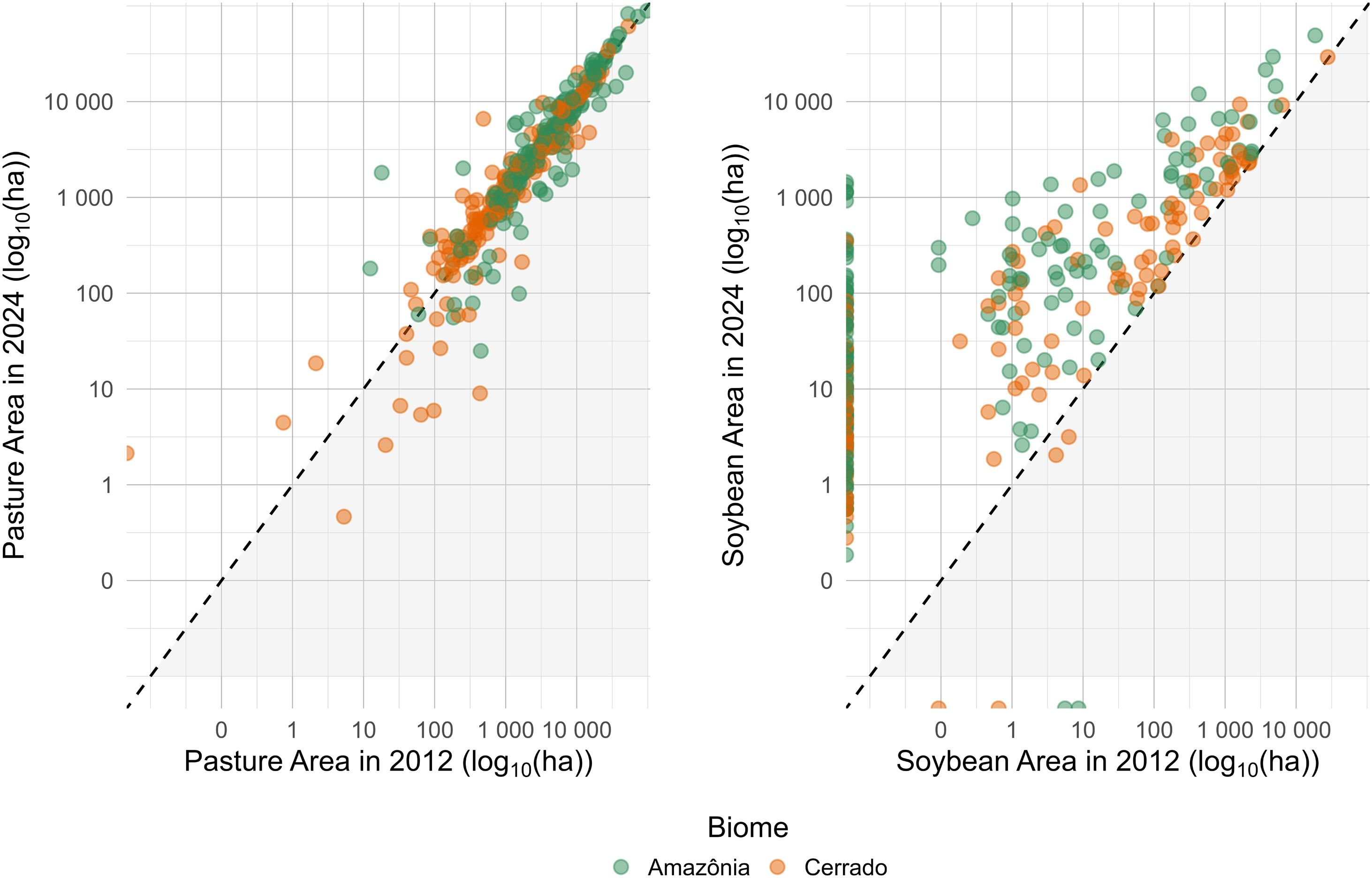
Similarly, land tenure regularization remains limited. PCI monitoring data show that only 11.5% of federal settlement lots and 13.9% (T1, I04) of state-level settlements have achieved regularization (PCI Institute, 2024). Particularly across Amazon and Cerrado biomes, soybean cultivation experienced a net increase of +231,313 ha in the rural settlements, across 97.9% of the settlements in which it was detected (286 of 292 with soybean) between 2012 and 2024 (Fig. 4) (INCRA, 2019; MapBiomas, 2025). This suggests the increasing use of settlements for export-oriented commodity production rather than local food systems (Rajão et al., 2020), with family farmers renting or leasing land for soybean cultivation (da Silva et al., 2023). Likewise, other commodity crops (i.e., sugar, rice, cotton) expanded within rural settlements, while forested areas declined (Table S1). The emphasis on large-scale productive supply chains within the broader PCI context has therefore coincided with increased soybean cultivation in rural settlements (Table S2), suggesting that the PCI jurisdictional framework has not yet sufficiently addressed the structural inequities in land tenure and market access (da Silva et al., 2023; Delabre et al., 2020; Garrett et al., 2024), that constrain smallholder inclusion (von Essen and Lambin, 2021). These findings link the two pillars directly: the inclusion shortfall, persistently low land-tenure regularization (I04; Table 1), appears to feed the conservation shortfall, as unregularized smallholders lease their lots for soybean and other commodity crops, driving the concurrent expansion of cropland and decline of forest observed within these settlements (Fig. 4; Table S1–S2). This coupling, rather than the two shortfalls considered separately, is what motivates our hypothesis that realigning the Conserve and Include components could improve outcomes on both. Although smallholder family farmers were included in the original PCI design, these unresolved land regularization constraints remain a central barrier to accessing capital and credit lines, limiting the effective implementation of PCI’s inclusion objectives in Mato Grosso. For example, Brazil’s Central Bank rural credit data indicates only 4.1% of the US$ 37 billion granted in 2024/2025 harvest were allocated to small holder farmers (Central Bank of Brazil, 2025).
Changes in pasture and soybean cultivation area across 379 legally granted rural settlements in the Amazonia and Cerrado biomes of Mato Grosso (2012–2024; INCRA settlement perimeters intersected with MapBiomas Brazil Collection 10). Each point represents a rural settlement; x-axis showing the area in 2012 (120,152 ha total soy, 2,106,760 ha total pasture) and the y-axis showing the area in 2024 (351,465 ha total soy, 2,240,973 ha total pasture). The plot uses a logarithmic scale for both axis (data source: MapBiomas, 2025; INCRA, 2019).
Beyond assessing progress toward the PCI Strategy’s stated targets presented in the previous section, we identify broader design constraints that may limit its long-term effectiveness. Jurisdictional approaches are intended to operate across entire political jurisdictions, integrate environmental, social, and economic objectives, engage affected stakeholders, and align public policies with financial and market incentives (von Essen and Lambin, 2021; Macdonald et al., 2024). Drawing from these principles, we propose four opportunities to strengthen the PCI Strategy: (1) integrate across-biomes ecological interdependence into future monitoring frameworks, (2) incorporate Protected Areas (Indigenous Territories and Conservation Units) to increase landscape visualization of conservation impact, (3) strengthen small-holder and Indigenous Peoples participation through monitoring programs, technical assistance, and representation in the PCI governance structure; and (4) aligning positive economic incentives with the sustainability goals set by the PCI Strategy.
A critical design challenge of the PCI Strategy is the overlooked dimension of the ecological interdependence between Amazonia and neighboring biomes. Addressing illegal activities, such as land grabbing and deforestation, requires a strategy design that accounts for ecological interconnectedness across biomes. This omission is particularly relevant for a jurisdictional strategy. A central rationale of jurisdictional approaches is to move beyond fragmented interventions toward “wall-to-wall” governance across the political geography in which environmental, social, and productive processes interact (von Essen and Lambin, 2021; Macdonald et al., 2024). Monitoring only selected biome-specific outcomes may therefore reproduce the type of spatial and ecological mismatch that jurisdictional approaches are intended to overcome. Currently, the PCI targets only seek to reduce forest clearing in two biomes (Amazonia and Cerrado) leaving aside forest physiognomy in the Pantanal as well as savanna formations in the state. The biomes interconnectivity is shown in various forms. In some cases, conservation efforts in the Amazonia have led to spillover effects in other biomes (Dou et al., 2018). Cerrado biome supports over 1.3 million privately-run rural properties and an input-intensive agricultural system, but legal protection only requires conservation of 35% of Cerrado forests in private areas (Da Conceição Bispo et al., 2023). Ongoing Cerrado devegetation impacts water resources and the regional hydrology (Rodrigues et al., 2022), contributing to the drying of lowlands in Pantanal and associated increases in flammability (Santos et al., 2024). By 2050, devegetation and degradation of Cerrado is expected to reduce streamflow by approximately 15%, with rippling social, ecological, and economic effects, especially across the Pantanal’s floodplains (Salmona et al., 2023). Given that Mato Grosso’s PCI Strategy serves as an example of jurisdictional program, which may be replicated by other subnational groups in the Amazonia or other regions, it is important to demonstrate that the Strategy monitors conservation across the whole jurisdiction.
Another opportunity to strengthen the PCI Strategy lies in expanding its landscape approach to explicitly incorporate Protected Areas, that is both Indigenous Territories and Conservation Units. Although conservation was articulated as one of PCI’s three pillars, the strategy did not explicitly incorporate conserving Protected Areas, which account for 24.9% of Mato Grosso’s area (Eimer, 2022). As a result, PCI’s landscape approach excluded territories that have a proven role in avoiding deforestation (Josse et al., 2021), stabilizing regional climates (Almada et al., 2024; Sullivan et al., 2017), and enabling secondary forest regrowth (Baragwanath et al., 2023). Land-use dynamics since 2015 illustrate the implications of this design choice (Fig. 5). Areas formally recognized as Protected Areas have not increased since 2015. Instead, some areas have experienced territorial contraction, as exemplified by Cristalino State Park (118,000 ha), which remains under dispute with land grabbers in northern Mato Grosso. The Instituto Centro de Vida (ICV), which co-led the creation of PCI in 2015 and later withdrew from the Strategy, publicly criticized recent state measures, from limiting CAR recognition inside Indigenous Territories to easing mining in Legal Reserves, as “successive movements to weaken … the state's environmental laws” (Instituto Centro de Vida, 2024). Its withdrawal, from an organization once central to PCI, signals eroding confidence in the strategy’s governance. Concomitant with this governance gap, empirical evidence indicates that Indigenous Territories in Mato Grosso have experienced reduced rainfall (Rizzo et al., 2020), agricultural runoff (Sanches et al., 2021), and intensifying wildfires (Silvério et al., 2022). The limited integration of ITs and PAs within the PCI framework constrains the strategy’s effectiveness by excluding territories that are central to regional climate regulation, forest resilience, and avoided deforestation.
Production and conservation land use categories in Mato Grosso (2015–2024). The solid line reflects the values observed between 2015 and 2024 (MapBiomas, 2025). Land use categories include: (a) native vegetation area (60% target in dash line), (b) expansion of grain cultivation, and (c) pasture area. (iv) The percentage of area under Protected Areas (including Conservation Units and Indigenous Territories), although not formally part of PCI indicator, is reported considering Brazil's commitment under the Convention on Biological Diversity (CBD) to reach 30% of terrestrial area under protected regimes by 2030 (Ministério da Fazenda, 2025).
A third design principle concerns substantive rather than nominal stakeholder inclusion. The jurisdictional-approach literature identifies multi-stakeholder participation as a defining feature of jurisdictional-approach, but also documents persistent difficulties in translating formal participation into meaningful representation of smallholders, Indigenous Peoples, and other marginalized groups (Macdonald et al., 2024). One step for the State to increase stakeholder engagement is including Indigenous Peoples and Local Communities in the PCI governance. Indigenous communities, having deep-rooted knowledge and a profound connection to the land (De Araujo Fonseca and Bustamante, 2025), could be involved through co-governance mechanisms within PCI, such as participatory territorial monitoring systems, Indigenous-led fire brigades, and representation in decision-making committees that oversee conservation targets and resource allocation. Similar approaches have been piloted in Mato Grosso, including community-based monitoring methodologies (Sanches et al., 2021), and the participatory governance structures (Barros and Cabral, 2022). The State can also strengthen investments in ATER for small farmers to create scalable solutions. Promoting sustainable livelihoods can reduce deforestation and land degradation while increasing economic output (Hecht et al., 2021; Medina and Barbosa, 2023). Agroforestry systems, which integrate trees, shrubs and native grasses into agricultural landscapes, can enhance biodiversity, improve soil health, and provide additional income sources for farmers (Da Conceição Bispo et al., 2023). Supporting the adoption of such systems through technical assistance, financial incentives, and market access can help align agricultural productivity with socio-integration goals. Their participation ensures that deforestation, logging, and mining activities are kept outside protected areas, preserving the ecological integrity of these regions (Baragwanath et al., 2023). Collaborative initiatives to address environmental challenges, such as deforestation, droughts, and fires, should be established by creating opportunities and programs that integrate traditional practices with conventional agriculture.
A fourth design consideration concerns the alignment of jurisdictional sustainability performance with positive economic incentives. Jurisdictional approaches seek to connect public sustainability policies with financial and market incentives capable of rewarding improved performance and encouraging participation by producers and other stakeholders (von Essen and Lambin, 2021; Macdonald et al., 2024). Given state-level fiscal constraints (World Bank, 2019), a dedicated and expanding funding stream tied directly to PCI Strategy is unlikely in the near term. In this context, strengthening PCI may rely less on increasing direct programmatic spending and more on leveraging regulatory instruments and incentive-compatible policies that reorient existing financial flows. While economic incentives and credit restrictions have been shown to significantly influence deforestation trajectories (Assunção et al., 2020; Jayachandran et al., 2017; Sant’Anna et al., 2025), by 2024, only 23,452 ha in Mato Grosso received some modality of economic incentive for conservation (PCI Institute, 2024). A first set of measures requires no additional resources, only political will: enforcing Forest Code compliance, accelerating CAR and PRA validation, and conditioning rural credit access on environmental compliance. A second set demands additional investment: expanding payment for ecosystem services (PES) for family farmers, strengthening technical assistance (ATER), and financing agroforestry and restoration. These should be tied explicitly to non-state funding sources already active in the region, given than fiscal constraints make a dedicated state funding stream unlikely. The experience of neighboring Pará, which has advanced more aggressively in structuring reforestation and restoration financing (Governo do Pará, 2023), illustrates how clearer funding commitments can strengthen policy credibility and investor confidence under Environmental, Social, and Governance (ESG) frameworks. Strengthening PCI therefore requires not only enforcement capacity but supporting incentive architecture to match the Strategy’s targets.
The need for cross-biome integration in jurisdictional approaches like PCI also has an important climate-resilience dimension. Climate change poses a significant threat to both agricultural productivity and conservation efforts in Mato Grosso. The State is vulnerable to extreme weather events, changes in precipitation patterns, and increased frequency of wildfires (Costa et al., 2021). Enhancing climate resilience through adaptive agricultural practices and mosaic landscape management is crucial for the long-term success of the PCI Strategy. This is not only necessary for biodiversity conservation efforts, but also essential for agricultural productivity to remain competitive, considering that so far, Mato Grosso’s agricultural sector has rarely relied on irrigation, counting with the ecosystem service of flowing Amazonia rivers to irrigate agricultural fields (Abramovay et al., 2021). This includes promoting sustainable agriculture practices that minimize soil disturbance, maintain soil cover, and diversify crop rotations. Additionally, restoring degraded lands and riparian forests can enhance ecosystem services such as water regulation and carbon sequestration, contributing to climate mitigation and adaptation efforts.
ConclusionThe PCI Strategy represents an innovative framework to reconcile agricultural production, environmental conservation and social inclusion in the tropics. While Mato Grosso has achieved substantial gains in agricultural productivity and improved monitoring capacity, the strategy remains uneven in delivering conservation and inclusion outcomes. Our analysis highlights three potential trajectories: implementing the strategy as originally designed, strengthening it to address the broader socio-environmental dynamics, or – going in the opposite direction – reclassifying forests as savannas and “legalizing” deforestation and degradation (Prizibisczki, 2024). The latter would threaten crop loss due to extreme weather events, accelerate biodiversity loss, increase fire risk, and deepen socio-environmental inequalities by exposing Indigenous Peoples, traditional communities, and smallholders to heightened livelihood insecurity. By directing funding to the innovative nature of PCI strategy, grounded on the three axes of the agenda, Mato Grosso can solidify its role as a global leader in jurisdictional sustainability. Jurisdictional strategies gain legitimacy through independent monitoring, external audits, verifiable indicators, and deliberative bodies with real decision-making authority. The lessons learned from Mato Grosso's experience can inform broader efforts to protect tropical ecosystems in Latin America and beyond. As Brazil approaches its 2030 climate and zero deforestation commitments under the Paris Agreement and its Nationally Determined Contribution (Government of Brazil, 2024), and its goal to reach 30% of its land territory as Protected Areas by 2030 (Ministério da Fazenda, 2025) strengthening jurisdictional strategies such as PCI will be central to translating national targets into territorially grounded implementation. The experience of Mato Grosso illustrates both the potential and the institutional bottlenecks of aligning agricultural production, forest conservation, and social inclusion within a single governance framework.
ORCIDSFelipe Storch: 0009-0004-2819-3120
Leandro Maracahipes: 0000-0002-6148-3291
André Dias: 0000-0003-2585-0602
Fernanda Xavier: 0000-0002-7979-9841
Nathalia Potter: 0009-0000-0534-6252
Bela Starinchak: 0009-0002-0731-9551
Ane Alencar: 0000-0001-5605-7469
Nadav Bendavid: 0000-0002-8219-7032
Paulo Brando: 0000-0001-8952-7025
Author contributionsF.S. and P.B. conceptualized the study. F.S. wrote the original draft. All authors contributed to writing, review and editing. P.B. supervised the project.
Additional informationCorrespondence and requests for materials should be addressed to Felipe Storch.
One of the authors (A.D.) is affiliated with the Department of the Environment, Government of the State of Mato Grosso, the jurisdiction whose sustainability strategy (PCI) is evaluated in this study. This affiliation is disclosed in the interest of transparency. The analysis is based solely on official, publicly available PCI monitoring data and peer-reviewed and public sources; no author’s institutional affiliation played any role in the design, data selection, analysis, or interpretation of the findings, and the views expressed are those of the authors and do not represent an official position of the Government of Mato Grosso. The remaining authors declare no competing interests.
This study was partly supported by the National Science Foundation (IOS #1457602/1457662, DEB #1541851, LTREB #2027827, #2554040, EAR #1739724, NSF-BoCP #2325993), Conselho Nacional de Desenvolvimento Científico e Tecnológico—CNPq (PELD-TANG #441703/2016-0, #441940/2020-0, and #446041/2024-6), and Fundação de Amparo à Pesquisa do Estado de Mato Grosso (#0001685/2025).
The following is Supplementary data to this article: