



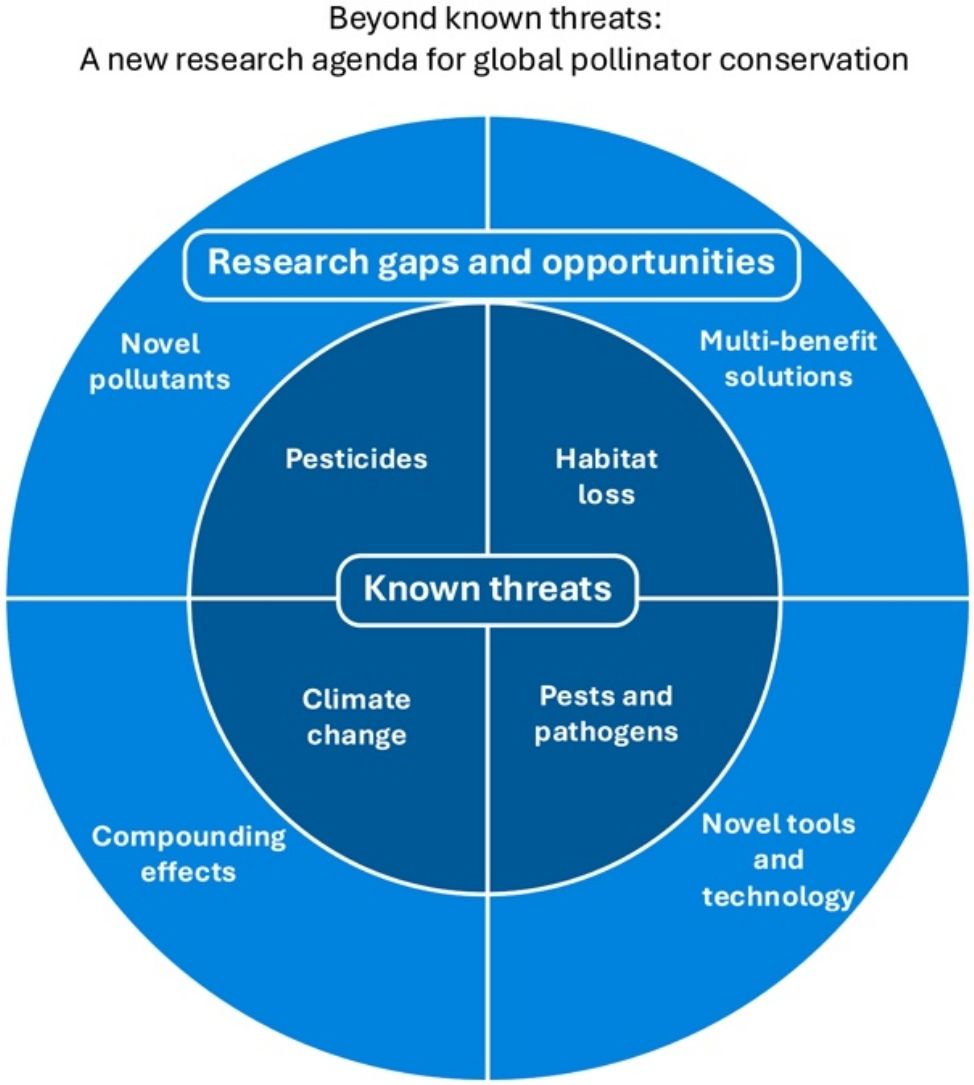
As a vital component of global food security and ecosystem health, pollinators are essential for sustaining both natural systems and human populations, yet their numbers continue to decline despite extensive conservation efforts. Although well-known threats such as habitat loss, pesticides, and climate change remain serious concerns, focusing only on well-known threats could overshadow the necessity of re-orienting conservation agendas to address new pressures and opportunities created by rapidly shifting environmental, technological, and socio-political landscapes, which have yet to be fully integrated into conservation agendas. We synthesise the findings of a global rapid assessment that used expert elicitation to identify urgent emerging global threats and opportunities for pollinators. Emerging threats stemmed from diverse sources, including novel forms of pollution (such as microplastics, artificial light, heavy metals, and nitrogen oxides) and the compounding effects of well-known stressors. Conversely, significant opportunities for pollinator conservation were found in the strategic use of novel tools and technology for targeted conservation, and in solutions that benefit multiple ecosystem services through novel land uses. Further research into these key areas will allow us to act early on these findings to better protect pollinators in the future and preserve the benefits they provide for people and nature.
Pollinators provide vital services key to sustainability, biodiversity, and ecosystem health. A decline in pollinator populations threatens food production (e.g., fruits, vegetables, and nuts) and ecosystem health (IPBES, 2016). Research and conservation agendas focus on well-known global threats to pollinators including habitat loss, pesticides, climate change, parasites, and other diseases, and invasive species (Brown et al., 2016; IPBES, 2016; Dicks et al., 2021; Vanbergen et al., 2013; Goulson et al., 2015). These well-known threats have been the focus of extensive empirical and policy attention, with mechanisms, impacts, and mitigation strategies increasingly well understood. However, novel emerging and region-specific risks require greater recognition than they are currently receiving to ensure effective conservation.
Our aim is to inform and broaden research agendas and to catalyse interdisciplinary global engagement with these complex challenges. Much as climate science relies on early warning systems and scenario planning, pollinator conservation needs to anticipate under-recognised and future challenges and opportunities. Evidence is emerging for previously overlooked sources of impact on pollinators. Drawing on an expert elicitation involving international pollinator experts (Howard et al., 2025), we present a synthesis that offers a conceptual perspective for refining pollinator conservation. We share high-impact, under-recognised trends that could provide timely insights to guide pollinator research and conservation between horizon scans. This perspective provides a framework for anticipating emerging threats and opportunities in pollinator conservation across socio-ecological systems. To guide policy development for pollinator conservation as early as possible we must bring lesser-studied, high-impact issues to the forefront to refine the research focus. Integrating diverse perspectives and disciplines will be critical to address these complex challenges. Pollinator conservation sits at the intersection of ecology, agriculture, technology, and socio-economic systems, requiring collaboration across environmental science, social science, policy, and local knowledge.
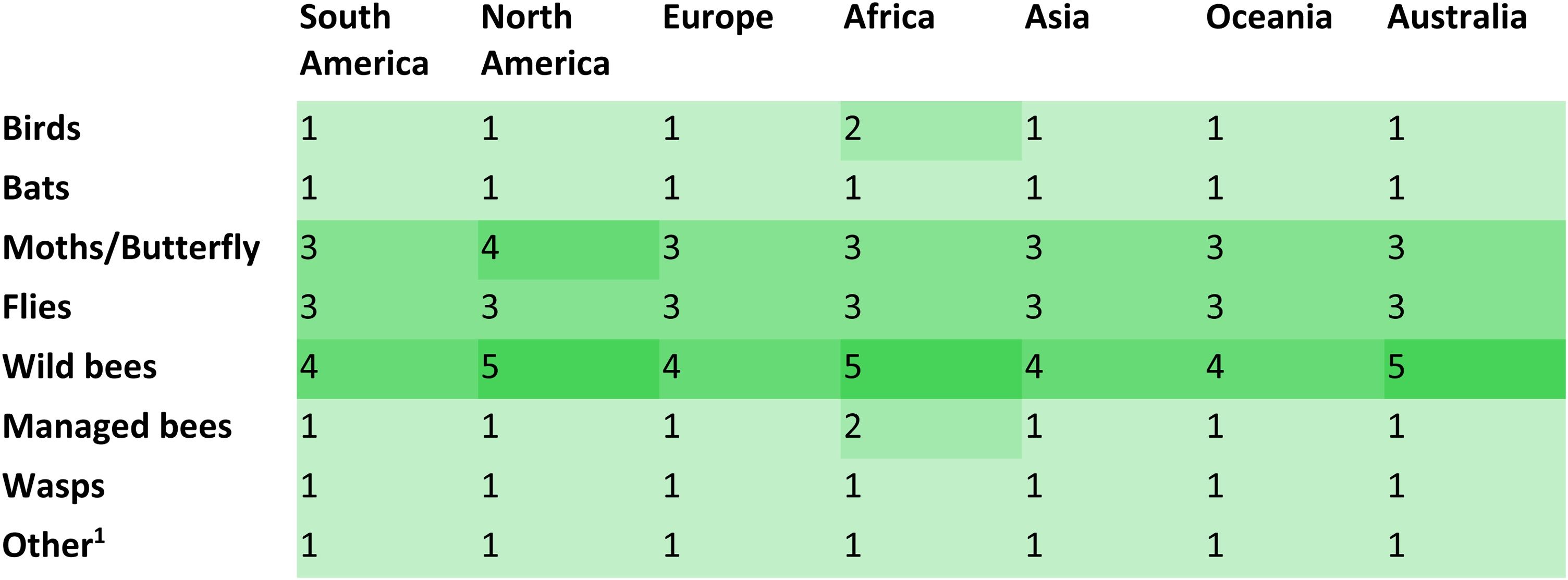
MethodsOverall, 23 pollinator experts were contacted and invited to participate in the study. These experts were chosen to cover a range of taxonomic pollinator expertise and to broadly represent geographic knowledge across the continents. A strong coverage of those criteria by the 10 participating experts is demonstrated in Table 1.
The number of experts (n = 10) participating in the structured questionnaires within each taxonomic and broad geographic area of expertise. Experts could select multiple geographic regions and taxonomic groups. Both the numerical values and cell shading represent the total count of experts with specific knowledge of each area and group.
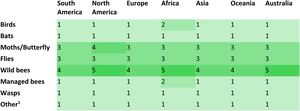
1One expert selected ‘Other’ and specified ‘general pollinator ecology’ to reflect broad ecological expertise rather than taxon-specific knowledge.
We elicited expert opinion using two consecutive structured questionnaires. Questionnaire one was designed to elicit a longlist of emerging and under-researched threats and opportunities for pollinators over a timeframe of the next 5–15 years. We asked experts to focus on novel issues that were only beginning to gain attention and to provide any evidence for their argument. This process generated a longlist of 44 threats and 36 opportunities with associated references (Howard et al., 2025, Annex 2). This list was collated by removing well-known issues (those mentioned in the last major horizon scan (Brown et al., 2016) and consolidating any duplicates. This collated list (Howard et al., 2025, Annex 3) was alphabetised and used to form questionnaire 2.
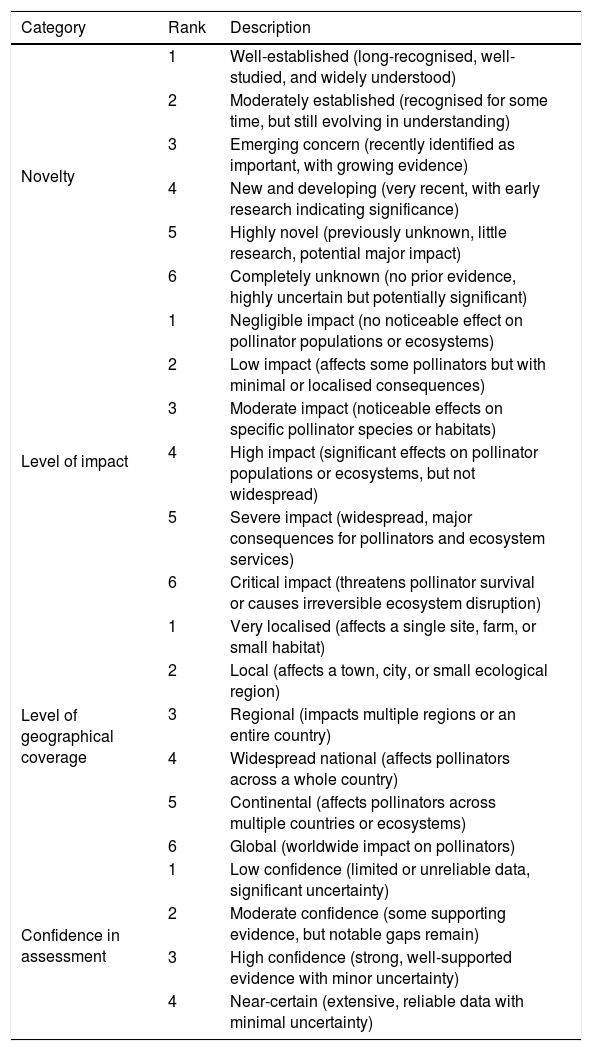
For questionnaire two, the same group of experts were asked to score each listed item based on its novelty, geographical coverage, potential impact on pollinator populations, and their confidence in their assessment according to the criteria in Table 2. An even number of rankings were used to reduce fence-sitting. The highest-ranked threats and opportunities were then used to guide a review of scientific and grey literature. Questionnaire two was sent to experts within one month of sending questionnaire one, and experts were given no more than two weeks to complete each questionnaire. Overall, ten experts participated in the survey process, nine in questionnaire two.
Criteria for questionnaire two, the expert scoring process of a longlist of expert-identified threats and opportunities for pollinators.
| Category | Rank | Description |
|---|---|---|
| Novelty | 1 | Well-established (long-recognised, well-studied, and widely understood) |
| 2 | Moderately established (recognised for some time, but still evolving in understanding) | |
| 3 | Emerging concern (recently identified as important, with growing evidence) | |
| 4 | New and developing (very recent, with early research indicating significance) | |
| 5 | Highly novel (previously unknown, little research, potential major impact) | |
| 6 | Completely unknown (no prior evidence, highly uncertain but potentially significant) | |
| Level of impact | 1 | Negligible impact (no noticeable effect on pollinator populations or ecosystems) |
| 2 | Low impact (affects some pollinators but with minimal or localised consequences) | |
| 3 | Moderate impact (noticeable effects on specific pollinator species or habitats) | |
| 4 | High impact (significant effects on pollinator populations or ecosystems, but not widespread) | |
| 5 | Severe impact (widespread, major consequences for pollinators and ecosystem services) | |
| 6 | Critical impact (threatens pollinator survival or causes irreversible ecosystem disruption) | |
| Level of geographical coverage | 1 | Very localised (affects a single site, farm, or small habitat) |
| 2 | Local (affects a town, city, or small ecological region) | |
| 3 | Regional (impacts multiple regions or an entire country) | |
| 4 | Widespread national (affects pollinators across a whole country) | |
| 5 | Continental (affects pollinators across multiple countries or ecosystems) | |
| 6 | Global (worldwide impact on pollinators) | |
| Confidence in assessment | 1 | Low confidence (limited or unreliable data, significant uncertainty) |
| 2 | Moderate confidence (some supporting evidence, but notable gaps remain) | |
| 3 | High confidence (strong, well-supported evidence with minor uncertainty) | |
| 4 | Near-certain (extensive, reliable data with minimal uncertainty) |
From this assessment emerged the most novel and impactful threats and opportunities, from regional to global scales, according to the experts. In some, but not all cases, the threats and potential opportunities are opposing aspects of a similar issue. For example, increasing focus on net zero initiatives is driving large-scale tree planting efforts; this could offer a significant opportunity to enhance pollinator biodiversity when prioritising diverse native species, yet they pose a considerable threat if tree species are chosen without considering their ecological impact on floral and nesting resources.
EthicsEthical approval for this study was obtained from the University of Reading Research Ethics Committee (APD Ethical Clearance), reference number D0016, and participants gave informed consent to participate in the study.
ResultsThe analysis revealed emerging threats and opportunities expected to impact pollinators within the next 5–15 years (Howard et al., 2025). In no particular order, the topics presented here represent the core findings warranting greater attention from researchers and decision-makers. Emerging pollutants were a major theme of important threats to pollinators; among them microplastics, antibiotics, heavy metals (e.g., lead, mercury, cadmium), air pollution (e.g., ozone, sulphur dioxide, and nitrogen oxides) and artificial light. Additional themes included interactions between threats, for example, pesticide cocktails and increased severity of wildfires under climate change and habitat degradation. Additionally, the results revealed emerging opportunities for pollinator conservation. For example, this included emerging tools and technologies, including those which could be used for monitoring and safeguarding pollinators, exploring solutions that benefit multiple ecosystem services, and beekeeping legislation to protect wild bees, particularly in locations surrounding protected areas.
DiscussionWe discuss the above results in light of the current literature to align our results with established evidence. Pollution was a repeated theme among the results, revealing a complex array of lesser-known pollutants, from chemical residues to physical contaminants, that extend far beyond pesticides alone. For example, microplastics are more ubiquitous than was previously thought (INSIGNIA-EU Consortium, 2024), and preliminary studies suggest hive contamination and negative consequences for honey bee survival, and growth (Al Naggar et al., 2024). Studies to date have focused mainly on honey bees (Willcox et al., 2023). Whilst, to our knowledge, specific pollinating avian species have yet to be investigated, microplastics have been detected in the bodies of a variety of other birds (Wang et al., 2025). According to studies in managed birds (poultry), the negative consequences of microplastic ingestion and inhalation for avian species can include gut inflammation, tissue damage, and disruption of organ function (Carrasco et al., 2025). Microplastics are also ingested and inhaled by bats, including nectar-feeding species (Correia et al., 2023). This has been associated with decreased body mass, but the full effects require further investigation (Cable et al., 2025). The ubiquity of microplastics suggests research should investigate the threat to all pollinator taxa (Anbumani and Kakkar, 2018), representing a critical methodological gap in ecotoxicology.
Similarly, residual antibiotics are emerging as a threat to pollinators. They can contaminate honey bee hives and honey, and exposure to antibiotics affects bee foraging behaviour, reducing the number of flower visits, which may impact survival and reproduction (Avila et al., 2024). Across the continents, antimicrobial resistance is widespread across mammalian taxa, including bats (Smoglica et al., 2025). There is evidence of multidrug-resistant and pathogenic bacterial spread from human to wildlife, for example, flying foxes living proximal to humans (McDougall et al., 2021). A recent review focusing on bird species highlighted wild birds as potential reservoirs for antimicrobial resistance as a result of foraging environments polluted with antibiotics (e.g., antimicrobial-treated fields or contaminated surface water) (Mbuthia and Hoza, 2025). Further research is needed for wider pollinating (and non-pollinating) species (e.g., bumble bees (Avila et al., 2022, 2024), bats (Smoglica et al., 2025), and birds (Mbuthia and Hoza, 2025), which could inform strengthened regulations and monitoring, which is particularly important for regions lacking effective laws and safe practices for antibiotic use and disposal (Kraemer et al., 2019; Thakur et al., 2025).
Heavy metals, such as cadmium, mercury, and lead, also affect pollinator behaviour, health, reproduction, and survival (Monchanin et al., 2023; Polykretis et al., 2016; Li et al., 2022; Provase et al., 2021). However, most research on heavy metal pollution and pollinators has focused on honey bees and a few wild bee species, leaving the full effects unknown. Lead, mercury, cadmium and arsenic can have biochemical, histological, and physiological sub-lethal effects on mammals, and can cause muscle weakness and spasms, even at low doses. For example, a recent study investigated insectivorous bat species living in urban environments considered uncontaminated with heavy metals. They found that cadmium, lead and zinc increased in concentration within the body of the bats as they aged, and suggested that these metals could pose a health risk to bats in areas where levels are elevated such as large cities with high traffic and surrounding mines and smelters (Timofieieva et al., 2024). This likely includes pollinating bat species. Similarly, negative effects of heavy metals on bird species, such as decreased reproductive health due to lead poisoning (Khwankitrittikul et al., 2024), could extend to pollinating birds. Since heavy metals persist and accumulate over time, understanding their cumulative impact on pollinator health, behaviour and survival is a critical area for an expanded research focus.
Airborne forms of pollution, such as ozone, sulphur dioxide, and nitrogen oxides, are a threat to insects, including pollinators, and recent research suggests that even moderate levels of air pollution can reduce insect health (Ryalls et al., 2022). For example, diesel exhaust and ozone (O3) can alter the olfaction of bees and flower visitation patterns by insect pollinators (Vanderplanck et al., 2021; Rollin et al., 2022; Ryalls et al., 2022). These effects may be particularly accentuated in areas with few vegetative resources (Coallier et al., 2025). Airborne forms of nitrogen oxides may combine with other sources of nitrogen, for example, fertilisers. Together, this total amount of nitrogen can change the types of flowers available to pollinators (David et al., 2019; Carvalheiro et al., 2020). Air pollution has been linked to stress, immunosuppression, behavioural effects, and respiratory distress and illness in avian species (Sanderfoot and Holloway, 2017). Studies have found negative associations between bird abundance and ambient ozone concentrations. For example, in the United States it is estimated that the decline in ozone concentrations have averted major loss of avian populations, which may extend to pollinating species (Liang et al., 2020). This area requires further investigation, and whilst a broad consensus of the impacts of air pollution on terrestrial birds is lacking, most studies find at least one negative consequence (Barton et al., 2023).
An additional emerging form of pollution is artificial light. Nocturnal pollinators are underrepresented in research, yet artificial light is now also recognised as a major pollutant to these species (Barentine, 2023), reducing flower visits by up to 62% (Knop et al., 2017) through disruption of a moth's life cycle and behaviour (Boyes et al., 2021). Given the expected expansion of urban areas, as the world’s population increasingly migrates to cities and towns, light pollution could be particularly damaging in the future.
Beyond the single-factor threats, the analysis revealed an important theme: the compounding effects of well-known threats, such as the interaction between climate change, extreme weather, and habitat degradation along with the combined impacts of different pesticides. For example, climate change is altering fire regimes worldwide, driving increases in their size, severity, frequency, and duration, and shifting their seasonal timing (Hogendoorn et al., 2021; Dorey et al., 2021; Latty and Forster, 2024). For ecosystems that have evolved with fire, periodic burning can contribute to long-term persistence of wild plant and pollinator communities. However, although research in this area is still developing, these more extreme wildfires can impact pollinators either not evolved with fire or not able to adapt to new fire regimes that are emerging with climate change. Intensified fire activity can damage or eliminate critical habitats, reducing the availability of floral resources and nesting sites and forcing pollinators to move further in search of suitable conditions. For example, nectarivorous birds completely avoid recently burnt vegetation in South African fynbos (Geerts et al., 2012), although visitation rates increase again at 6–15 months post-fire (Mantintsilili et al., 2025). Fragmented landscapes compound these pressures, where opportunities for refuge, persistence, and recolonisation are already limited (Dorey et al., 2021). When habitat patches are small relative to fire size, pollinators lose spatial refuges and cannot track post-fire floral resources across the landscape (Driscoll et al., 2021). In small, isolated plant populations, this can create density-dependent pollination failures where fire-stimulated flowering fails to improve seed production because of insufficient pollinator access or low conspecific densities (Beck et al., 2023). Specialist pollinator species face the greatest risk, as losing key host plants following fire may result in local extinctions (Latty and Forster, 2024).
Similarly, whilst pesticide pollution remains a well-known threat to pollinators, the risks associated with pesticide cocktails are poorly understood. A global analysis of pesticide trends from 1995 to 2020 revealed that the use of insecticides, herbicides, and fungicides is increasing in Africa and South America, while herbicide use is rising in North America and Central Asia, and fungicide use is growing across all Asian regions (Basu et al., 2024). This is concerning, as early research suggests that certain pesticide combinations, such as fungicides and insecticides, disrupt metabolic detoxification pathways in some bumble bees and mason bees, which can lower their tolerance to the active ingredients (Basu et al., 2024). Compounding this issue, some regions have reduced or stopped monitoring pesticide use due to budget cuts or systemic failures (Kolok et al., 2023), potentially leading to the repeated use of more toxic insecticides even after pests have developed a resistance. Understanding how pesticide combinations affect wild pollinators is crucial, particularly in developing nations where food security and exports are highly dependent on pollinator-reliant crops (Murphy et al., 2022).
In addition to these emerging threats, our analysis revealed a promising theme of novel tools and technologies as opportunities for pollinator conservation. Whilst emerging technologies are not without their own potential threats to biodiversity (e.g., Sutherland et al., 2021, 2022, 2023, 2024, 2026), these can offer conservation and monitoring opportunities. Camera traps, audio sensors, remote sensing, and mobile citizen science apps may enable improved pollinator and habitat monitoring, for example by detecting threats and providing early warnings, allowing for non-destructive sampling, and wide or rapid data collection on pollinator populations and plant-pollinator interactions (Pringle et al., 2023; Persson et al., 2023). These tools can help identify the most endangered areas, habitats, and species to guide conservation efforts (Chaplin-Kramer et al., 2019). Artificial intelligence (AI) acting as a data-processing layer can improve crop pest detection facilitating more targeted pesticide use, reducing harm to beneficial insects like pollinators (Willcox et al., 2023). By employing machine learning to automate the identification of species in images, AI can transform massive datasets into real-time conservation insights. Alongside traditional methods, research and development of novel tools and methods for conservation and monitoring could inform and streamline conservation efforts for efficient use of time and resources. The majority of pollinators are flying insects, and many of these remain undescribed, in particular in tropical regions (e.g. Boyle et al., 2024). A lack of funding for both taxonomy and field surveys hampers monitoring and conservation of pollinator communities (Taylor et al., 2018). Development of molecular taxonomy may increase the efficacy of real-time community assessments using e-DNA, which could facilitate monitoring pollinator populations worldwide (Leandro et al., 2024). Novel tools and technologies should be encouraged alongside continued investment in, and capacity building for, existing monitoring and evaluation efforts. A critical shortage of taxonomic expertise is particularly problematic in biodiverse regions of the Global South, where knowledge deficits are most severe despite these areas hosting unique and often incomparable fauna (Skaldina and Blande, 2025). Although not discussed in detail here, the taxonomic impediment represents a long-standing and urgent challenge rather than an emerging threat. As summarized by Engel et al. (2021), persistent taxonomic gaps which are fundamental to pollinator diversity assessment and monitoring, are driven by: “(1) insufficient recognition of taxonomy as a rigorous scientific discipline by peers and policy-makers; (2) a critical shortage of well-trained professionals with strong theoretical and practical expertise; and (3) legal, administrative, and ideological barriers to the collection and curation of specimens, without which robust taxonomy cannot be sustained” (Engel et al., 2021).
A fourth theme resulting from this analysis that warrants greater research attention was exploring solutions that benefit multiple ecosystem services. The impacts of modern land conversion, including net zero tree plantings, indoor farming, and solar parks, depend on whether pollinator conservation is a core consideration. When pollination is prioritised alongside other services like carbon capture, and soil health, these projects can become win-win solutions rather than threats. Research into nature-based solutions, conserving, protecting, or managing full ecosystems while supporting human well-being (such as urban green spaces, urban farming, and agroforestry), shows that pollinators are rarely considered (Rafferty and Cosma, 2024). This is a research and conservation area which needs broadening to include pollinators, hopefully enhancing the effectiveness of nature-based solutions.
Our analysis also identified opportunities to reduce the negative impacts of managed bees on wild populations. A scarcity of available natural resources can lead to managed bees being moved within or surrounding conservation areas. This can occur without full recognition and understanding of the pressures exerted on wild bees by managed bees through disease spread or competition for resources (Iwasaki and Hogendoorn, 2022). However, thoughtful planning and a clear understanding of ecosystem dynamics can align beekeeping practices with broader conservation goals (Beaurepaire et al., 2025). Research focusing on beekeeping effects in and around conservation areas could inform and support well-designed beekeeping legislation, supported by guidelines that recognise wild pollinator diversity and protect their unique roles.
ConclusionsThis synthesis proposes a conceptual framework linking novel pollutants, technological innovation, and multi-service land-use planning as central pillars for next-generation pollinator conservation. This assessment provides critical and timely insights to support pollinator conservation in the period between major horizon scans. The coming decade will determine whether pollinator declines can be halted or reversed. The issues identified here highlight research gaps which could aid conservation efforts to prevent serious future pollinator declines. These issues span multiple disciplines and bridge ecological research, technology, policy, and local knowledge. Using these findings to steer pollinator research could inform conservation planning and improve pollinator protection. A larger group of experts and a full “horizon scanning” approach are needed to complete the picture (Brown et al., 2016). Addressing the research gaps identified here will be key for developing socially informed and forward-thinking strategies for pollinator conservation. Integrating these multidisciplinary insights into new conceptual frameworks and conservation planning now will be essential to safeguard pollinators and the services they provide for people and nature. We hope this synthesis prompts and helps to inform discussion about whether current conservation approaches are sufficient for the rapidly changing threats and opportunities facing pollinators.
EthicsEthical approval for this study was obtained from the University of Reading Research Ethics Committee (APD Ethical Clearance), reference number D0016, and participants gave informed consent to participate in the study.
FundingThis work was financially supported by Re:wild (Bee:wild).
Data archivingWe intend to store our data on the University of Reading Research Data Archive.
The authors have no conflicts of interest.
We thank bee:wild (beewild.rewild.org) for supporting the project and Re:wild (www.rewild.org) for funding it. We thank Tom Breeze (University of Reading, UK) for help with the questionnaire design. We thank Matthew L. Forister (University of Nevada, USA) for contribution of pollinator knowledge. We are grateful for the valuable insight and input provided by our collaborators at bee:wild - Karen Ziffer and Eva Kruse - and Re:wild - Matt Foster and Robin Moore.
The following are Supplementary data to this article: