



The fragmentation of the Brazilian Atlantic Forest has led to partially isolated fragments under strong edge effects. At the edges of these fragments, there is usually dominance of native climbing species and invasive African grasses. The high density of climbers creates a “wall” around the forest, known to hamper seedling establishment and eventually limit forest regeneration. We hypothesize that, to some extent, this dense “wall” formed by native climbing species may act as a barrier against the spread of invasive grasses into forest fragments. In this study, we investigated how the abundance of native climbers affects the abundance of invasive grasses at forest edges, and whether climbers influence seedling establishment and woody species richness. We conducted vegetation surveys at 45 edges distributed among private and public protected areas, via plot sampling (1 m2; n = 1,225). We used Generalized Linear Mixed Models to investigate: (i) the effects of climber abundance (predictor) on the abundance of invasive grasses (response); (ii) the effects of climber and invasive grass abundance (predictors) on the abundance of eudicot seedlings (response); and (iii) the effects of average climber and invasive grass abundance (predictors) on species richness of trees and shrubs (response). The abundance of native climbers negatively affected the abundance of invasive grasses and reduced the establishment of eudicot seedlings. However, it did not affect species richness of native trees and shrubs. The effect of climbers on invasive grasses directly reduces the risk of wildfires, especially during the dry season. We understand that, despite these evidences, restoration projects may still have reasons to manage climbers in areas under regeneration. Then, we propose five main aspects to be carefully considered before initiating any direct intervention on climbers, considering the risk of fire and distribution of local species.
Forest fragmentation has historically affected native biodiversity in the Neotropics. Under premises of economic development, portions of megadiverse tropical forests such as Brazilian Atlantic Forest have been reduced to scattered fragments throughout the landscape (Vancine et al., 2024). In the Atlantic Forest, seasonal forests with low-relief terrain are currently the most fragmented ones (Rezende et al., 2018; Ribeiro et al., 2011). The increased fragmentation has led to intensification of edge effects (Beecher, 1942), creating local conditions for a well-known structural change in forest edges, where climbing species are widespread and abundant (i.e. lianas, vines and scramblers; sensuSperotto et al., 2020). In the context of the Atlantic Forest, one of the most biodiverse and threatened biomes in the world (Eisenlohr et al., 2015), the effects of the increased abundance of climbing species in edges warrant a comprehensive evaluation of their ecological consequences.
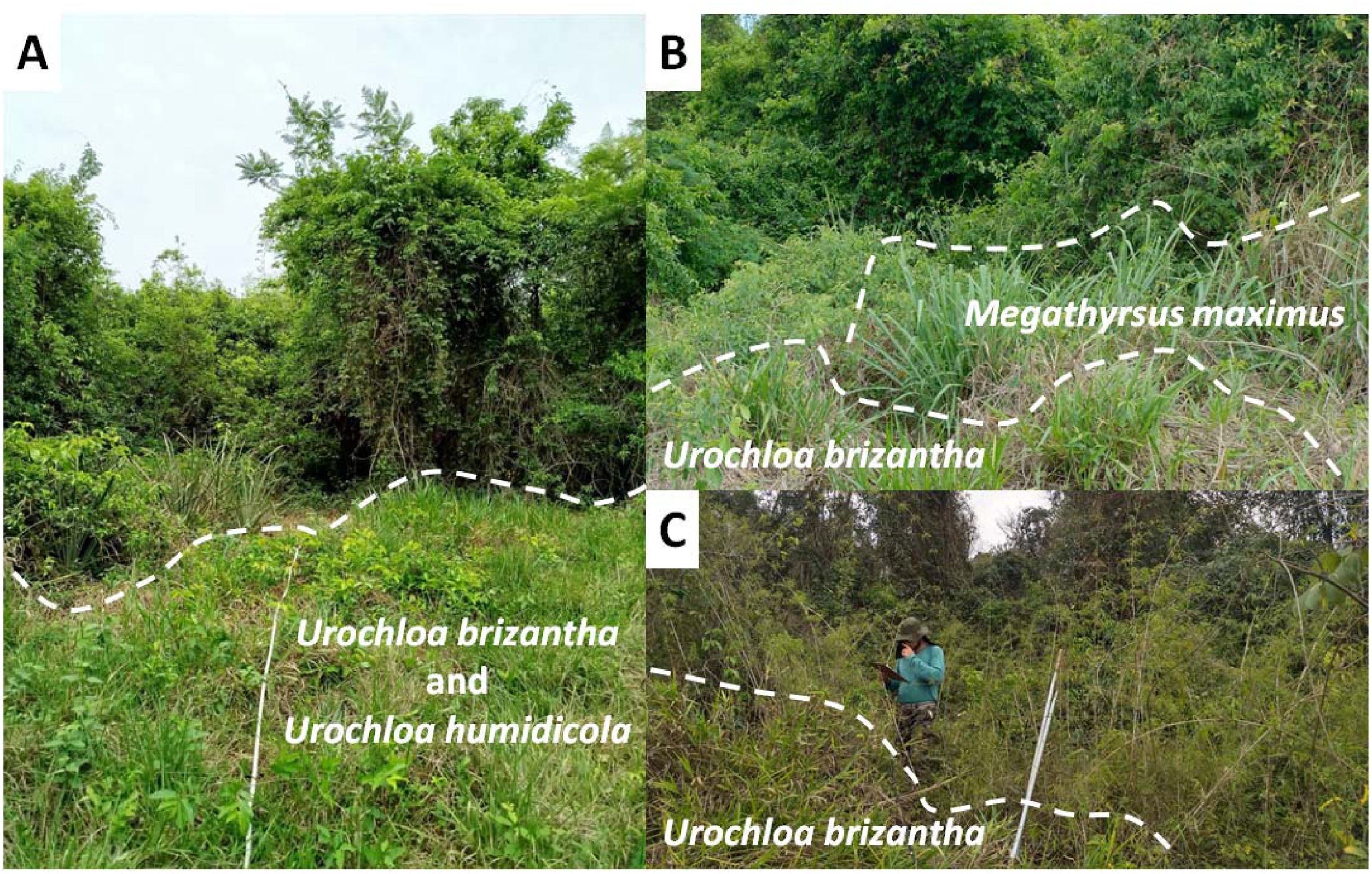
Although native, this plethora of climbing species has been historically overlooked and even portrayed as a problem that threatens forest trees (da Cunha Vargas et al., 2022; Estrada-Villegas and Schnitzer, 2018). Climbing species are known to occur at high densities at forest edges, hamper seedling establishment and even topple trees due to excessive weight (da Cunha Vargas et al., 2022; Estrada-Villegas and Schnitzer, 2018). In some public and private protected areas, edges are managed by removing climbing species in an effort to allow seedling establishment and prevent tree falls (Estrada-Villegas and Schnitzer, 2018; Jordão, 2009; Sfair et al., 2015; Venegas-González et al., 2020). Eventually, the density of native climbing species at forest edges can become so high to the point where they form a “wall” around the forest. This “wall” at forest edges is well known by any field ecologist who has ever tried to enter a forest and had to cut through the dense entanglement of climbing stems (Fig. 1).
Forest edges dominated by native climbing species - arranged like a “wall” at the edge, and invasive African grasses (São Paulo – Southeastern Brazil). The climbing species also grow beyond the “wall”, climbing onto small shrubs and on the invasive grasses. (A) Forest edge (roadside) in Parque Estadual do Morro do Diabo - two invasive grasses (Urochloa brizantha and Urochloa humidicola) are occupying the edge, that is partially occupied by native climbing species, in particular Fridericia chica (Bignoniaceae) and Forsteronia pubescens (Apocynaceae). (B) Forest edge (roadside) in Parque Estadual Porto Ferreira (Southeastern Brazil) - invasive grasses: Urochloa brizantha and Megathyrsus maximus, and native climbers: mostly Anemopaegma chamberlaynii (Bignoniaceae), Amphilophium paniculatum (Bignoniaceae) and Alicia anisopetala (Malpighiaceae). (C) Forest edge (abandoned pasture) in a private area (Boituva, Southeastern Brazil) – invasive grass: Urochloa brizantha, and native climbers: mostly Serjania fuscifolia (Sapindaceae) and Merostachys skvortzovii (Poaceae).
Forest edges are particularly vulnerable to invasive species, since susceptibility to invasion increases with edge effects (Holway, 2005; McDonald and Urban, 2006). At the edges of Atlantic Forest fragments, dominant invasive species include African grasses (Zardetto and Fidelis, 2026), native to savannas, and adapted to direct sunlight – permanent condition at forest edges (Mantoani and Torezan, 2016; Siminski et al., 2021). Although most of these invasive grasses cannot thrive under low-light availability (i.e. core areas), their high density at forest edges directly increases the risk of wildfires during the dry season (Balch et al., 2009; Flory et al., 2015). These edge-restricted invasive grasses are also known to hamper the establishment of native seedlings (Flory and Clay, 2010), consequently disrupting regenerating processes. New perspectives toward native climbing species are necessary, considering that these species are consistently neglected in forest surveys (an issue addressed since Putz and Mooney, 1991) and are often biasedly generalized as villains in forest conservation. In this study, we investigated how the abundance of native climbers affects the abundance of invasive grasses at forest edges, and if the climbers indeed affect seedling establishment and the richness of tree and shrub species, using semideciduous seasonal forests in the state of São Paulo as study sites. We hypothesize that, to some degree, this dense “wall” of native climbing species may act against the spread of invasive grasses at the forest edge. Considering the costs and demanding efforts involved in removing climbing species in protected areas and private restoration areas, and the consequences of plant invasions in native communities, this study can provide important evidence to facilitate planning of management strategies.
MethodsStudy sitesThe surveys were conducted at edges of Atlantic Forest fragments - Southeastern Brazil – in private properties under natural regeneration (protected areas sensu Brazilian federal Law 12,651/2012) and in public protected areas (protected areas sensu Brazilian federal Law 9,985/2000). All fragments were classified as seasonal semideciduous forests (IBGE, 2012), a vegetation type characterized by well-defined seasonality and up to 50% of tree species being deciduous (Souza et al., 2019). It is among the most fragmented vegetation types within the Atlantic Forest (Ribeiro et al., 2009).
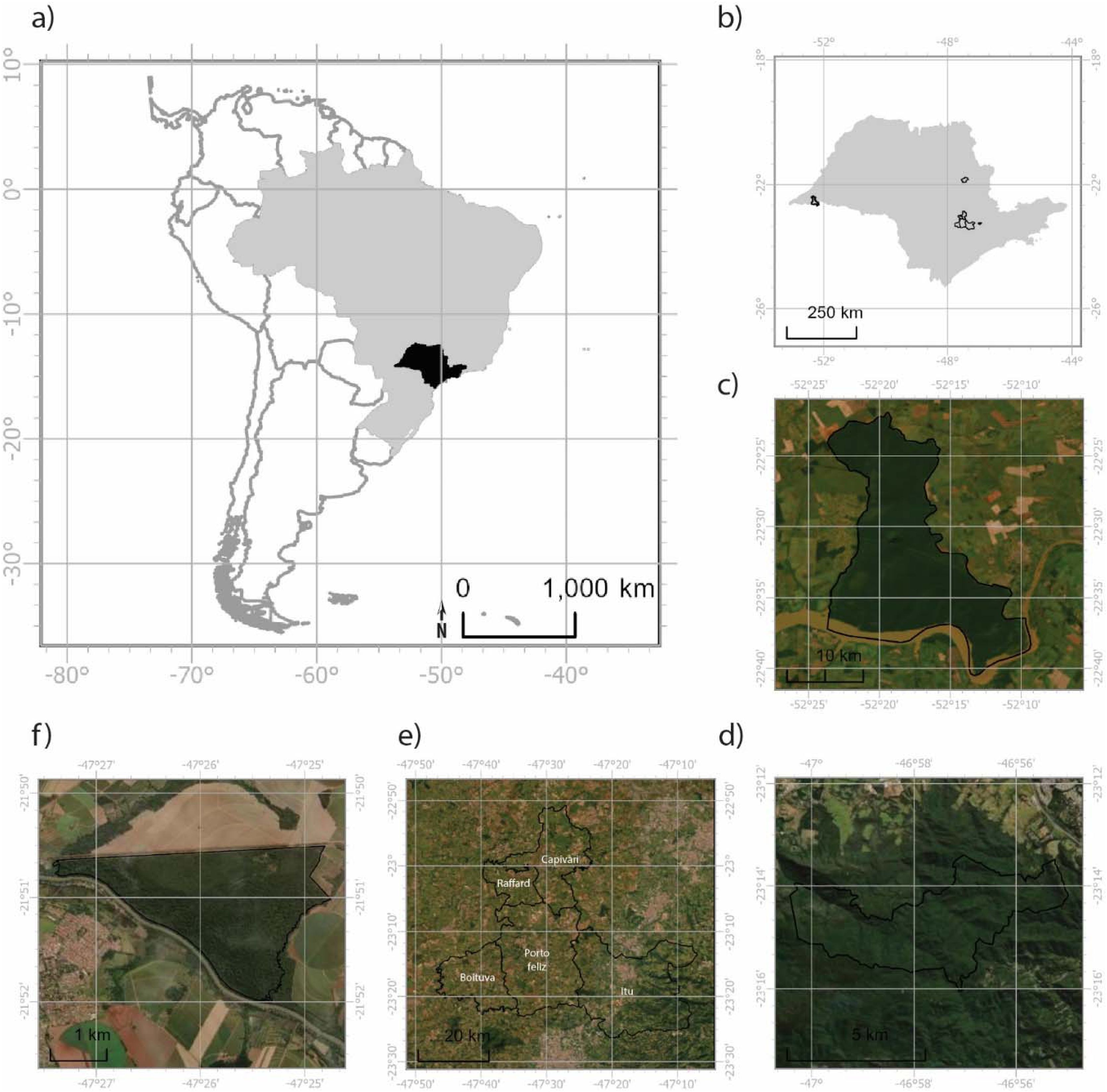
We conducted fieldwork at 45 edges – 30 in private properties located in rural and peri-urban areas and 15 distributed in three public protected areas. In private properties, the forest edges bordered abandoned pastures or agricultural lands undergoing natural regeneration (Fig. 2). The areas of the fragments ranged from 1.5 ha to 70.3 ha. In these areas, fieldwork was carried out between March 2020 to September 2022. In public protected areas, we conducted fieldwork in Parque Estadual Porto Ferreira (616 ha; 5 edges), Reserva Biológica Municipal da Serra do Japi (2,071 ha; 4 edges) and Parque Estadual do Morro do Diabo (33,845 ha; 6 edges). In these areas, forest edges bordered internal dirt roads and firebreaks, and fieldwork was carried out between August to December 2024.
Study region. (a) Brazil (grey) and the state of São Paulo (black); (b) the state of São Paulo and the surveyed areas; (c) Parque Estadual do Morro do Diabo (left in the map b); (d) Reserva Biológica da Serra do Japi (right in the map b); (e) the cities of Capivari, Rafard, Porto Feliz, Itu and Boituva, where we visited private protected areas (bottom-center in the map b); (f) the city of Porto Ferreira, where Parque Estadual Porto Ferreira is located (top-center in map b). Credits: Marco Chiminazzo.
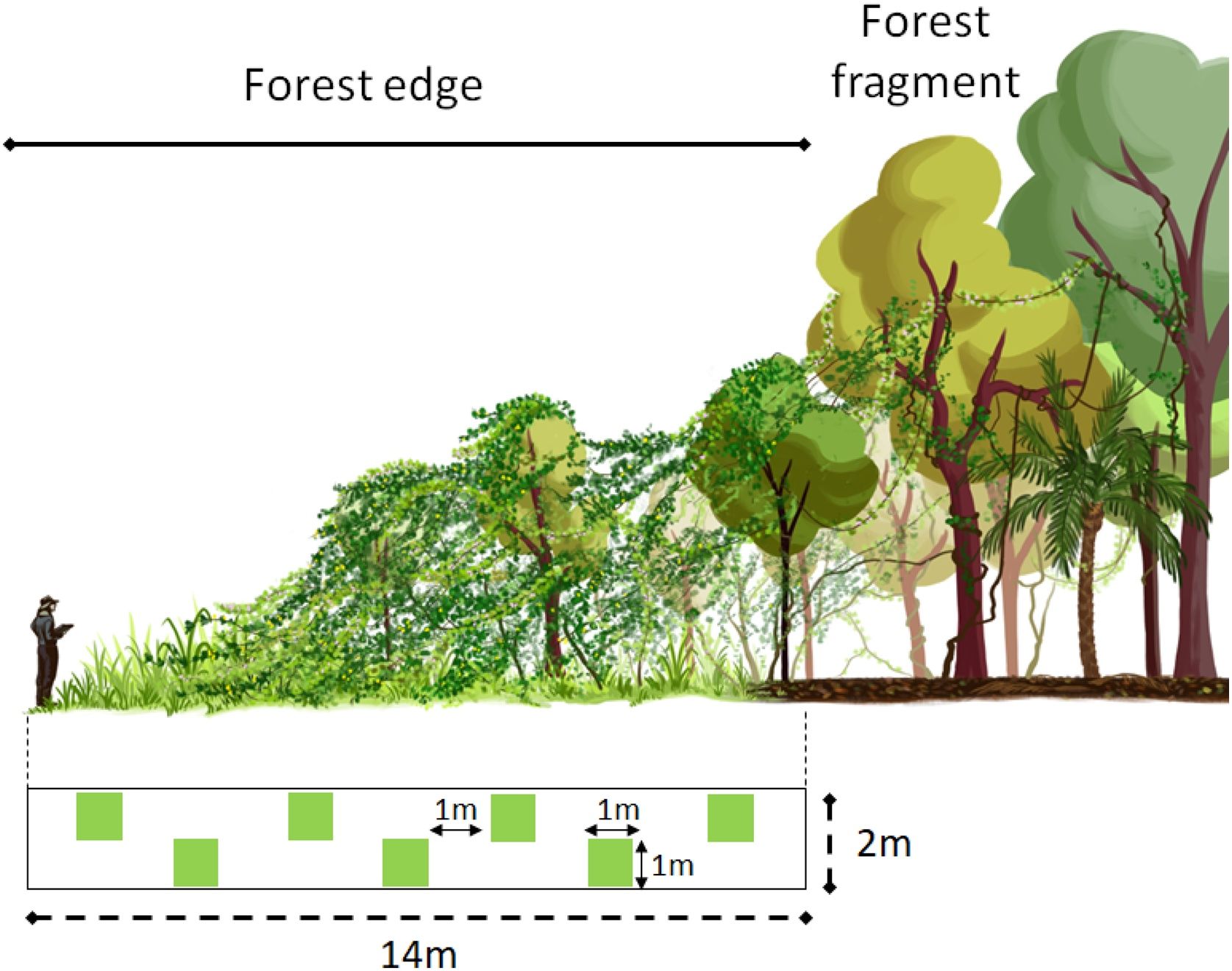
We conducted vegetation surveys in plots (sampling units; 1 m2) established at the edges, arranged in transects (14m × 2m) to comprise the distance gradient towards the forest (Fig. 3). Each transect had 7 plots, 1 m distant from each other. In total, we surveyed 1,225 plots, distributed among 180 transects. The amount of transects per edge varied between 3−5. The transects were at least 20 m distant from each other. The number of plots per transect was always the same.
Transversal representation of a forest edge with high density of native climbing species and invasive grasses, typical of Atlantic Forest fragments (Brazil). At the edge, several climbing species can be found within the same area, climbing onto small trees and shrubs, and even onto the different invasive grass species (see Fig. 1 for actual photographs). Our sampling units (plots; 1m × 1m; n = 1,225) were arranged in transects (14m × 2m; n = 180) in groups of seven. The transects were established perpendicularly at the edge. Credits: Arthur Caldeira.
In each plot, we visually estimated the cover (%) of each climbing species, invasive grasses and eudicot seedlings (Braun-Blanquet, 1964, adapted). We also had a less frequent category named “other” - forbs, ferns and native grasses, for example - which were recorded in cover, but not included in the analyses. Only climbers shorter than 1.5 m were considered. We acknowledge that some climbing species might be restricted to higher canopies inside forests, but at the edges, there are very few trees/shrubs. All species were identified at species level, except for a few Bignoniaceae specimens without any reproductive material.
Additionally, to test if abundance of climbers and invasive grasses consistently affect the species richness of trees and shrubs at the edges, we conducted surveys for these growth forms as well. In each transect, we recorded the abundance of tree and shrub species by counting all individuals from each species present within the transect area (14m × 2m). Only adults and saplings taller than 1 m were considered. There were few methodological differences between private and public protected areas regarding tree and shrubs estimates of abundance. The differences refer to criteria of inclusion of individuals as part of the transect. In public areas, only individuals completely rooted inside the transect were considered, whereas in private areas, partially rooted individuals (i.e. at the edges of the transect) were included as well. Therefore, we standardized richness comparisons between transects using sample-coverage extrapolation/rarefaction approach provided by the iNEXT R package (v3.0.1 Chao et al., 2014; Hsieh et al., 2016).
Data analysisWe used Generalized Linear Mixed Models (GLMM) to investigate: (i) the effects of climber abundance (predictor) on the abundance of invasive grasses (response); (ii) the effects of climber and invasive grass abundance (predictors) on the abundance of eudicot seedlings (response); and (iii) the effects of average climber and invasive grass abundance (predictors) on species richness of trees and shrubs (response). For the first two models, we specified two levels of random effects to account for the spatially nested sampling design: plots nested within transects, and transects nested within fragment edges. For the third model, we included only the identity of the fragment edge as a random effect, because tree and shrub species richness were measured at the transect level. Additionally, in public protected areas (the largest fragments), transects located close to each other (∼25 m apart) were grouped in sets of three, and each set was treated as a single fragment edge in the random component of the GLMM. This decision was made to better represent potential spatial heterogeneity in these very large fragments.
For models (i) and (ii), we fitted Gaussian GLMMs with z-score transformed variables. For model (iii), we fitted a Gamma GLMM with a log link function. All models were fitted using the glmmTMB package in R (v1.1.10; Brooks et al., 2017). We examined 95% confidence intervals of predictor estimates as well as marginal R2 values (R2m). Model metrics were obtained using the performance package (v.0.13.0; Lüdecke et al., 2021). Model assessment was obtained using the DHARMa package (v0.4.7; Hartig, 2016), and the diagnostics are presented in the SI file (Table S1; Figs. S1-S3).
ResultsWe recorded 114 native climbing species (Table S2), distributed among 66 genera and 28 families, being Bignoniaceae (19 species), Malpighiaceae (15) and Sapindaceae (13) the most representative ones in number of species. Five invasive grass species were recorded: Cenchrus purpureus (Schumach.) Morrone, Megathyrsus maximus (Jacq.) B.K.Simon & S.W.L.Jacobs, Melinis minutiflora P.Beauv., Urochloa brizantha (Hochst. ex A.Rich.) R.D.Webster and Urochloa humidicola (Rendle) Morrone & Zuloaga.
Considering tree and shrub species, we recorded 283 species (Table S2), distributed among 164 genera and 60 families, with Fabaceae (43 species), Myrtaceae (26) and Rubiaceae (14) the most representative ones.
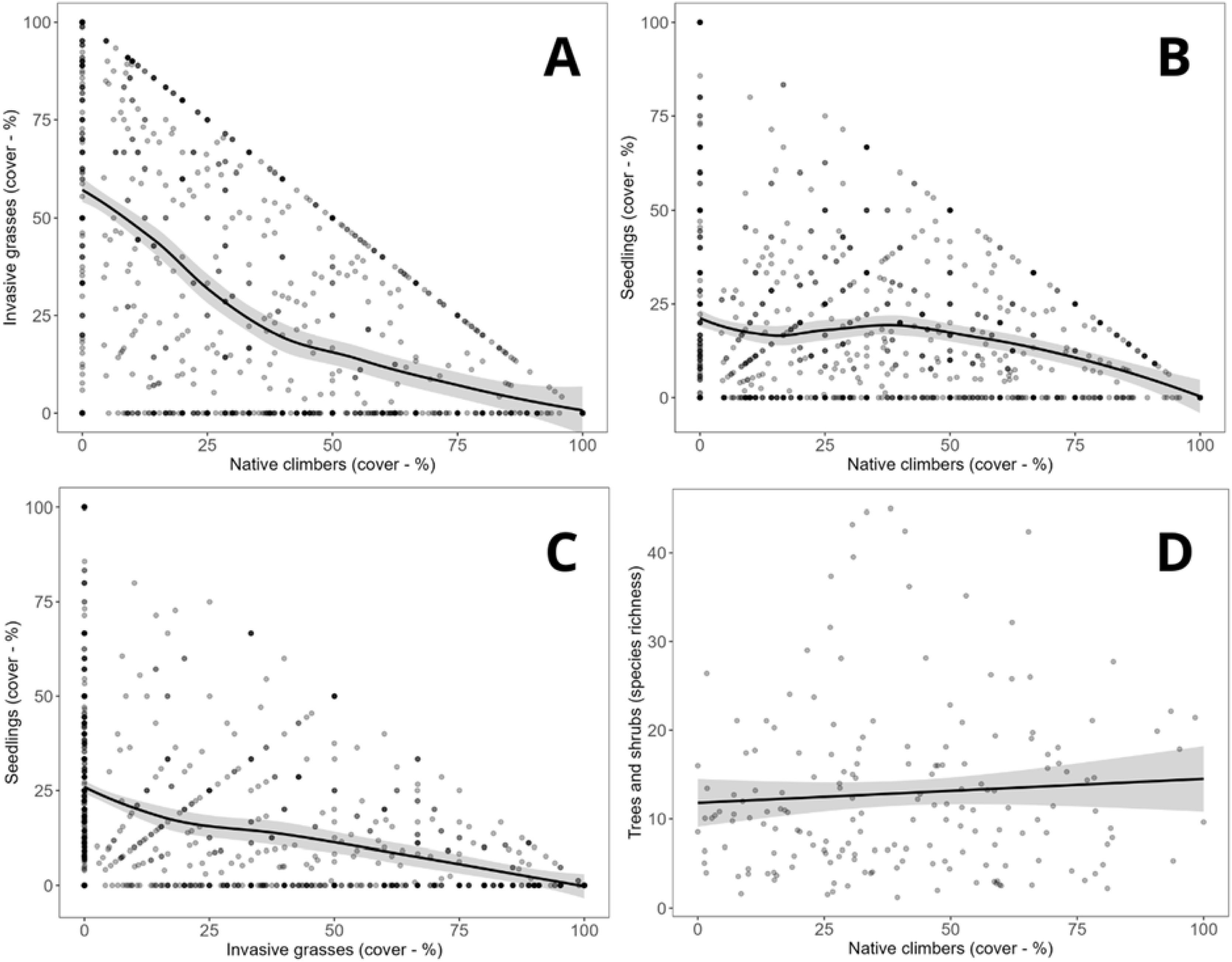
Climber abundance consistently reduced the abundance of invasive grasses (R2m = 0.33; CI [95%] = −0.64 to −0.54; Fig. 4A). Regarding eudicot seedlings, both climber and invasive grasses abundance reduced seedling abundance (R2m = 0.46; Fig. 4B and 4C). The magnitude of the decrease in seedling abundance was greater with invasive grass abundance (CI [95%] = −0.82 to −0.72) than with climber abundance (CI [95%] = −0.69 to −0.58).
Relationships between vegetation attributes: (A) cover of invasive grasses as a function of native climber cover (B) cover of eudicot seedings as a function of climber cover (C) cover of eudicot seedlings as a function of invasive-grass cover (D) estimated species richness of trees and shrubs as a function of climber cover. In panels A–C, each point represents a 1 × 1 m community. Darker points represent overlap of individual points with identical x and y values. Lines represent non-parametric smoothing of observed data. In panel D, each point represents a 14 × 2 m transect, and native climber cover corresponds to the average cover across communities within each transect. In panel A, the points aligned along the upper-left/bottom-right diagonal represent communities where only invasive grasses and native climbers were recorded (i.e., no seedlings), resulting in x and y values that necessarily sum to 100%; the same applies to panels B and C.
Estimated species richness of trees and shrubs did not respond consistently to either climber abundance or invasive-grass abundance (R2m = 0.05; Fig. 4D). Transects with higher climber abundance did not necessarily present lower tree and shrub richness (CI [95%] = −1.3 to 0.01). Although invasive-grass abundance showed a negative associated with richness of trees and shrubs (CI [95%] = −1.3 to −0.12), the amount of explained variation by predictors was very small (R2m ∼ 5%), indicating that these effects were not strong.
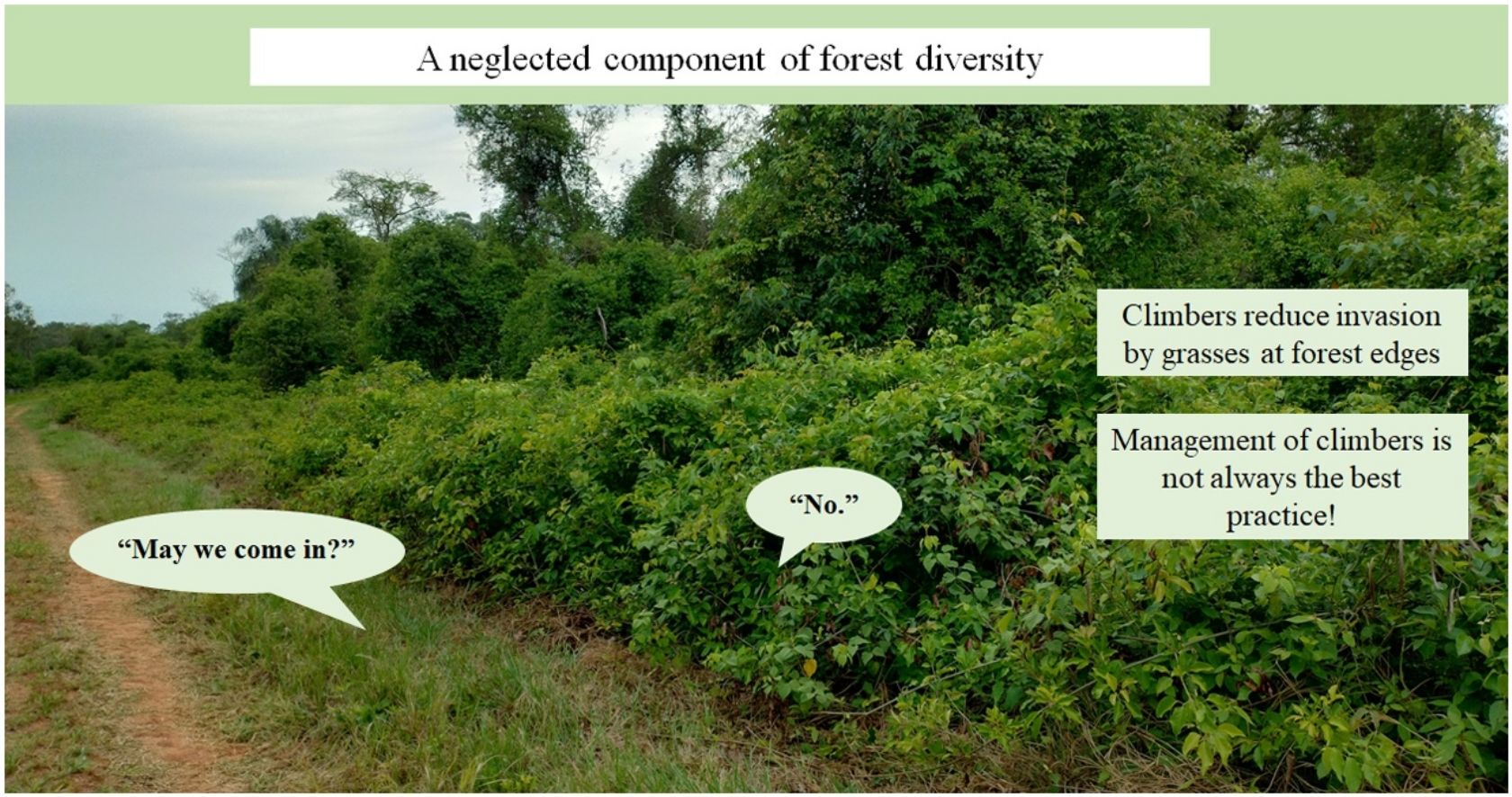
DiscussionThe abundance of native climbers directly restricted the dominance of invasive grasses, and reduced the establishment of eudicot seedlings. However, it did not affect species richness of trees and shrubs. The negative effects of native climbers on invasive grasses indicate consistent effects in forest fragments that differ substantially in historic land-use, size and local species pool. One plausible mechanism underlying this relationship is that native climbers may restrict invasive grasses via diminishment of light-availability. The five invasive grasses we recorded are C4 species (Sage, 2016), which are highly dependent on direct sunlight. The physical barrier created by the “wall” of native climbers at forest edges may intercept part of the sunlight (Campanello et al., 2007; Estrada-Villegas and Schnitzer, 2018). Invasive grasses are known to be dominant and potentially occupy most of the ground area, preventing establishment of forest seedlings and forbs (Flory and Clay, 2010; Zardetto and Siqueira, 2024). However, native climbers do not have to compete for ground space against grasses: they not only climb on the few arboreal individuals at forest edges, but also on the invasive grasses (as in Figs. 1 and 3). With time, climbers may potentially suppress invasive grasses by the intense shadowing. These findings highlight native climbers as capable of reducing the dominance of invasive grasses.
We also investigated two other factors related to native climbers in protected areas: the reduction in eudicot seedling establishment and the impoverishment of tree/shrub communities. We found a consistent negative effect of climbers on cover by eudicot seedlings. We suggest that the potential mechanism behind this pattern is also the intense shadowing caused by climbers (Campanello et al., 2012, 2007), as well as below-ground competition for root space (Toledo-Aceves and Swaine, 2008), which apparently may affect even the shadow-resistant tree/shrub species. However, invasive grasses caused a more severe reduction in seedling abundance (i.e. greater magnitude of the estimated slope) when compared to the native climbers. This result indicates that, although native climbers indeed reduce seedling establishment in the forest edges we sampled, dominance of invasive grasses can be even more detrimental to the natural regeneration in these sites.
Regarding species richness of native trees and shrubs, we did not find any negative effect caused by native climbers. Tree and shrub alpha diversity varied greatly (from ∼2 to ∼45 species) within transects, irrespective of abundance of native climbers and of invasive grasses. The variation in species richness of trees and shrubs may be more related to the fragmentation process itself, rather than the abundance of native climbers or invasive gasses. Fragment size, age, landscape connectivity and historical land use are strongly related to local species pools (Hending and Randrianarison, 2023; Šipek and Šajna, 2024; Trotta et al., 2023), and may even directly affect the abundance of climbers (César et al., 2018). We recognize that, for trees and shrubs in forest edges, the “climbers versus invasive grasses” dynamic may not be as determinant as the fragmentation conditions around each site.
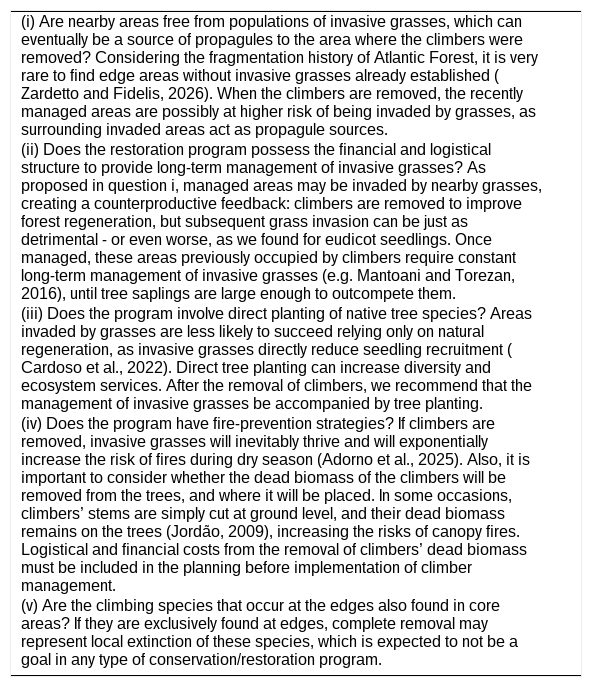
We understand that some restoration projects may still view climbers’ removal/control as a necessity, especially in the early stages of regeneration (see management approaches proposed by Sfair et al., 2015). Then, we propose five main aspects to be carefully considered before initiating any direct intervention on climbers (Box 1): (i) are nearby areas free from populations of invasive grasses? (ii) Does the restoration program possess financial and logistical structure to provide management of these invasive grasses for several years? (iii) Does the program involve direct tree planting of several species? (iv) Does the program have fire-prevention strategies, including removal of dead biomass after climber cutting? And finally, (v) are the climbing species that occur at the edges also found in core areas? If the answer to all the five items is affirmative, then the local control of native climbers is a reasonable alternative.
Five main aspects to be carefully considered before initiating any direct intervention on climbers in forest edges.
| (i) Are nearby areas free from populations of invasive grasses, which can eventually be a source of propagules to the area where the climbers were removed? Considering the fragmentation history of Atlantic Forest, it is very rare to find edge areas without invasive grasses already established (Zardetto and Fidelis, 2026). When the climbers are removed, the recently managed areas are possibly at higher risk of being invaded by grasses, as surrounding invaded areas act as propagule sources. |
| (ii) Does the restoration program possess the financial and logistical structure to provide long-term management of invasive grasses? As proposed in question i, managed areas may be invaded by nearby grasses, creating a counterproductive feedback: climbers are removed to improve forest regeneration, but subsequent grass invasion can be just as detrimental - or even worse, as we found for eudicot seedlings. Once managed, these areas previously occupied by climbers require constant long-term management of invasive grasses (e.g. Mantoani and Torezan, 2016), until tree saplings are large enough to outcompete them. |
| (iii) Does the program involve direct planting of native tree species? Areas invaded by grasses are less likely to succeed relying only on natural regeneration, as invasive grasses directly reduce seedling recruitment (Cardoso et al., 2022). Direct tree planting can increase diversity and ecosystem services. After the removal of climbers, we recommend that the management of invasive grasses be accompanied by tree planting. |
| (iv) Does the program have fire-prevention strategies? If climbers are removed, invasive grasses will inevitably thrive and will exponentially increase the risk of fires during dry season (Adorno et al., 2025). Also, it is important to consider whether the dead biomass of the climbers will be removed from the trees, and where it will be placed. In some occasions, climbers’ stems are simply cut at ground level, and their dead biomass remains on the trees (Jordão, 2009), increasing the risks of canopy fires. Logistical and financial costs from the removal of climbers’ dead biomass must be included in the planning before implementation of climber management. |
| (v) Are the climbing species that occur at the edges also found in core areas? If they are exclusively found at edges, complete removal may represent local extinction of these species, which is expected to not be a goal in any type of conservation/restoration program. |
We investigated the potential protective role that native climbing species play at edges of Atlantic Forest fragments, reducing invasion by exotic grasses. To our knowledge, no previous research has documented the role of native climbers as a physical barrier that suppresses the expansion of invasive grasses at forest edges. This study is not focused on advocating against the management of climbers in conservation/restoration programs, but rather on enumerating factors that must be meticulously considered before any intervention that involves removal or control of climbers. The trade-off between removal of climbers and invasive grasses dominance may be, at some degree, one of the key-factors that lead conservation/restoration projects to success. Inherently, long-term success is an undeniable necessity in the Atlantic Forest, one of the most diverse and fragmented biomes in the world.
FundingThis work was supported by São Paulo Research Foundation (FAPESP; grants 24/01670-4, 21/10639-5 and 20/14104-6). TS and AF also acknowledge the National Council for Scientific and Technological Development (CNPq) for research productivity grants (309496/2021-7 and 312689/2021-7).
Data statementAll raw data, R scripts and additional tables are publicly available in Zenodo: 10.5281/zenodo.22116167.
The authors declare that they have no known competing financial interests or personal relationships that could have appeared to influence the work reported in this paper.
We thank the protected areas’ managers for logistical and scientific support and the owners of the private properties for allowing us to visit their properties.
The following is Supplementary data to this article: