
- •
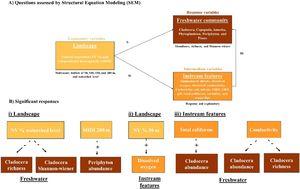
Landscape structure and instream features affect freshwater biodiversity at fine and large spatial scales.
- •
Microcrustaceans have been favored by landscapes dominated by crops and pastures.
- •
Landscape changes are favoring some biological groups which can lead to freshwater biotic homogenization.
- •
The unsustainable expansion of agriculture and livestock activities are compromising freshwater biodiversity and water quality.
- •
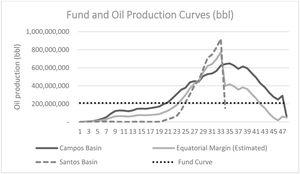
Brazilian Amazon offshore is potentially becoming a new frontier for oil exploration.
- •
This contradicts national and global pledges to fight planetary crises.
- •
Sub-national governments often rely on the consequent distribution of oil royalties.
- •
We propose that this is replaced by a Green Royalty Fund of USD 19.9–33.1 billion.
- •
Implementation would align with local and global biodiversity and climate pledges.
- •
We synthesize knowledge on the impacts of climate change on Brazil’s biodiversity.
- •
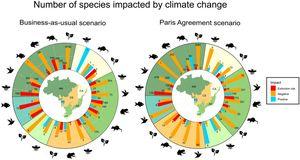
The greatest predicted impact is in the Pantanal, and the lowest in the Pampa.
- •
There are still large knowledge gaps due to spatial and taxonomic biases in studies.
- •
Paris Agreement could reduce impacts by 21% and cut extinction risk by half.
- •
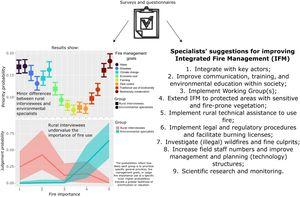
Minor differences exist between rural residents and environmental specialists regarding fire management priorities.
- •
Both groups prioritize protecting water resources and biodiversity conservation.
- •
Socioeconomic characteristics explain differences in fire management priorities.
- •
Most environmental specialists agree that IFM should also apply to private areas.
- •
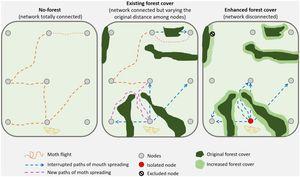
Increasing forest cover slow down and decrease the number of sites reached by pest.
- •
Sites have indirect connections to other sites by several alternative paths.
- •
Spatial networks predicted the most susceptible sites in the landscape.
- •
Forest cover control pest spreading through the agroecosystem.
- •
Spatial networks are a powerful predictive tool to manage the spread of pests.
- •
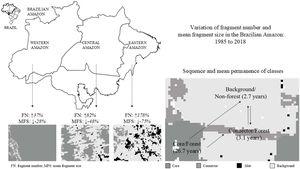
Amazon forest fragmentation shows an increase in fragments and reduction in size in three decades.
- •
The Amazon's fragmentation trajectory shifts from Core to Connector to Background.
- •
Central Amazon demands target conservation to avoid fragmentation like Eastern Amazon.
- •
Secondary forest may be used to reverse fragmentation.
- •
Fragmentation metrics and trajectory nourish conservation actions.
- •
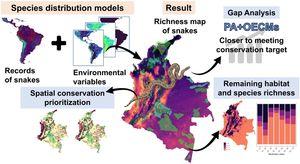
OECMs have recently been implemented in several countries, such as Colombia.
- •
15% of Colombia's snakes geographical range are represented within PAs.
- •
OECMs increase the representativeness of snakes and contribute to achieving conservation goals.
- •
Most priority areas were concentrated in regions with potential OECMs.
- •
OECMs complement the PAs, contributing to the conservation of biodiversity.
- •
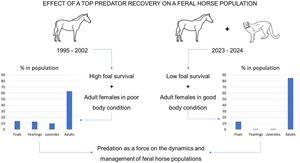
Growth rate of an Argentinian feral horse population stabilizes in association with puma recovery.
- •
Foal survival was four times lower in presence of a predator.
- •
The loss of foals allowed adult females to achieve better body condition.
- •
Top predators may have positive implications for the management of feral herbivores.
- •
This study is the first to document pumas as natural regulators of feral horse populations in South America.
- •
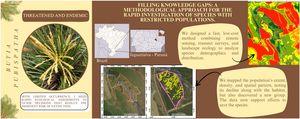
Endemic species with restricted populations often lack data for urgent conservation actions.
- •
Method, resource, and time limitations hinder data acquisition.
- •
NDVI, distance sampling, and landscape ecology revealed Butia pubispatha distribution.
- •
Our method succeeded, leading to the discovery of a new Butia pubispatha population.
- •
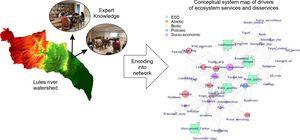
Simultaneous modelling of multiple ecosystem services is a pressing but hard task.
- •
Conceptual system maps formalise our understanding of multiple ecosystem services.
- •
Network analyses identify key system drivers for targeted data collection.
- •
Conceptual system maps should be revised regularly to reflect updated knowledge.